

Last Updated: March 2026
Deep cleaning teeth refers to a periodontal treatment known as scaling and root planing, which is commonly used to treat gum disease. During the procedure, dentists remove plaque and hardened tartar from beneath the gumline and smooth the root surfaces of the teeth. This process reduces bacterial buildup and allows the gum tissues to begin healing.
Deep cleaning is typically recommended when periodontal pockets develop due to infection of the gums. Without treatment, gum disease may continue progressing and may eventually lead to bone loss and tooth instability.

Introduction
Healthy gums play a fundamental role in supporting the teeth and maintaining long-term oral health. The gums act as a protective barrier around the roots of the teeth and help stabilize them within the jawbone. When the gums become inflamed or infected, the structures that support the teeth may gradually weaken.
One of the most common causes of gum disease is the accumulation of plaque and tartar along the gumline. Plaque is a sticky bacterial film that forms naturally on the teeth. When plaque is not removed regularly through brushing and flossing, it may harden into tartar.
Tartar provides a rough surface where bacteria can continue accumulating. Over time, this bacterial buildup can irritate the gums and trigger inflammation.
If the infection progresses beyond the earliest stage of gum disease, dentists may recommend a treatment known as deep cleaning teeth, medically referred to as scaling and root planing.
Unlike routine dental cleanings that focus primarily on the visible surfaces of the teeth, deep cleaning targets bacterial deposits that accumulate beneath the gumline.
At Smiles By Design Dentistry of San Diego, dentists evaluate gum health carefully during examinations and recommend periodontal treatment when signs of gum disease are detected.
Deep cleaning is a periodontal procedure designed to treat bacterial infection that develops beneath the gums. The procedure focuses on removing plaque and tartar from the root surfaces of the teeth, particularly in areas where bacteria have accumulated below the gumline.
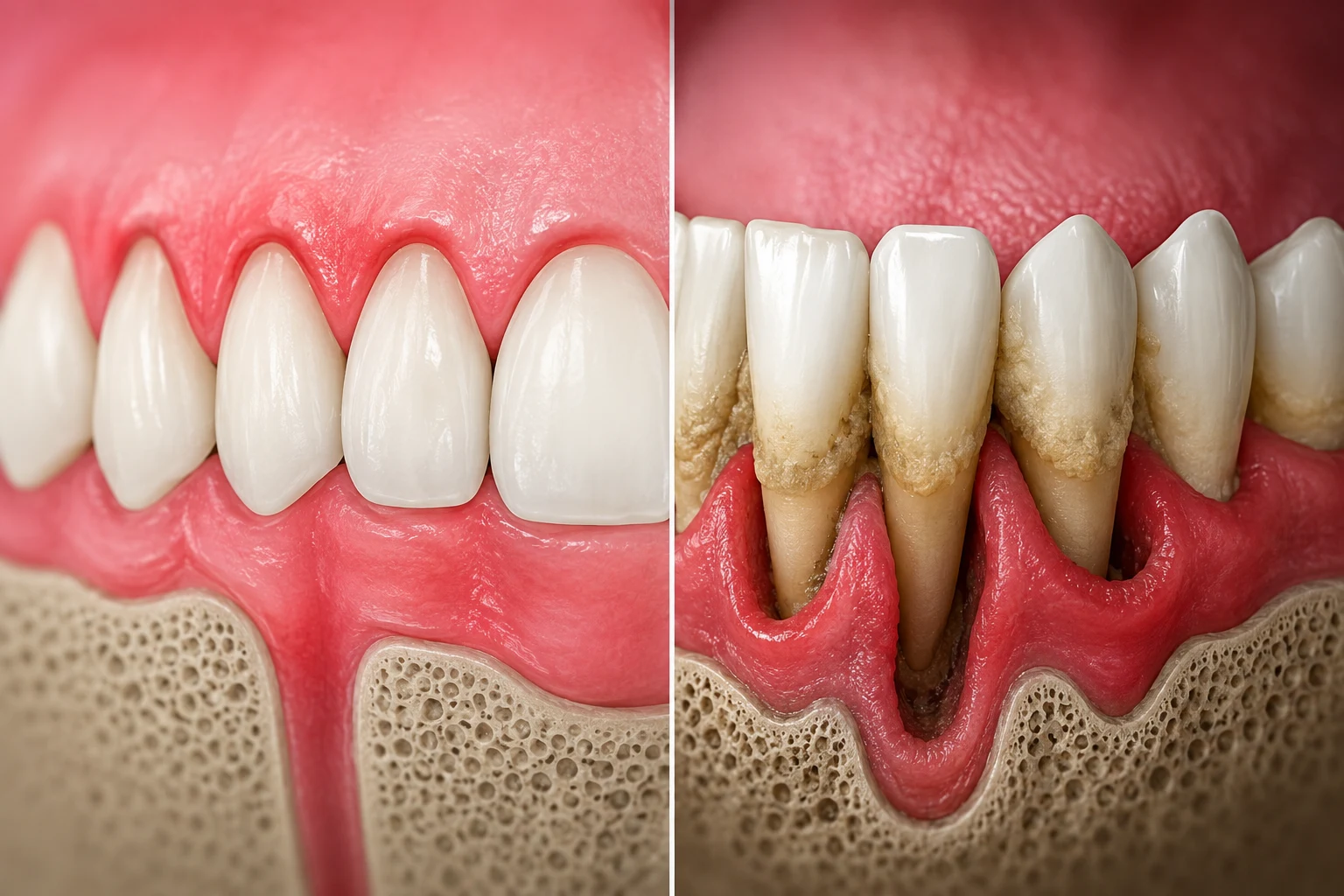
In a healthy mouth, the gum tissue fits closely around the teeth and forms shallow spaces known as gingival sulci. These spaces are typically shallow enough that brushing and flossing can help maintain cleanliness.
However, when gum disease develops, inflammation may cause the gums to pull away from the teeth. This separation creates deeper spaces called periodontal pockets.
These pockets provide an environment where bacteria can accumulate and multiply. Because these areas are difficult to clean with regular oral hygiene tools, professional treatment becomes necessary.
Deep cleaning helps remove the bacterial deposits that contribute to periodontal infection and supports healing of the surrounding gum tissues.

Gum disease develops through a gradual process involving bacterial accumulation and inflammation of the gum tissue.
The earliest stage of gum disease is known as gingivitis. During this stage the gums may appear red, swollen, or tender. Bleeding during brushing or flossing is also a common sign of gingivitis.
Although gingivitis involves inflammation of the gums, it does not yet affect the underlying bone that supports the teeth. At this stage, the condition is often reversible with improved oral hygiene and professional dental care.
If gingivitis is not treated, bacteria may continue spreading beneath the gums and begin affecting deeper supporting structures. This more advanced stage of gum disease is called periodontitis.
During periodontitis, periodontal pockets may develop as the gums separate from the teeth. Bacteria trapped in these pockets can trigger a chronic inflammatory response that gradually damages the surrounding bone.
As bone loss progresses, the teeth may eventually become loose if the infection is not treated.
Dentists recommend deep cleaning when signs of periodontal infection are detected during a dental examination. These signs are often identified through visual inspection, periodontal measurements, and diagnostic imaging.
One of the most important indicators is periodontal pocket depth. Dentists use a small measuring instrument called a periodontal probe to assess the space between the gums and teeth.
When pockets become deeper than normal, it suggests that bacterial infection may be affecting the supporting structures of the teeth.
Other clinical signs that may indicate the need for deep cleaning include:
• persistent gum bleeding
• gum swelling or redness
• tartar accumulation beneath the gums
• gum recession
• bone changes visible on dental X-rays
Identifying these signs early allows dentists to recommend treatment before periodontal damage becomes more severe.

Deep cleaning typically involves two primary steps: scaling and root planing.
During the scaling phase, dentists remove plaque and hardened tartar from the tooth surfaces above and below the gumline. Specialized dental instruments or ultrasonic devices are used to break apart and remove these deposits.
Once the deposits have been removed, the dentist performs root planing. This step involves smoothing the root surfaces of the teeth.
Smoothing the roots reduces rough areas where bacteria can easily attach. It also helps the gum tissue reattach more closely to the tooth surface.
Because deep cleaning often involves areas beneath the gums, local anesthetic may be used to keep the patient comfortable during the procedure.
In many cases the treatment is performed in sections of the mouth during multiple appointments.
Routine dental cleanings and deep cleaning treatments serve different purposes in maintaining oral health.
A routine dental cleaning focuses on removing plaque and tartar from the visible surfaces of the teeth above the gumline. These cleanings are preventive and are typically recommended every six months.
A deep cleaning, also called scaling and root planing, is recommended when gum disease has progressed beyond mild inflammation. When bacteria accumulate beneath the gumline and periodontal pockets form, deeper cleaning is required to remove infection from around the roots of the teeth.
Deep cleaning also includes smoothing the root surfaces to discourage bacterial reattachment and allow the gums to heal.
After deep cleaning, patients may experience mild gum tenderness or temporary tooth sensitivity. These symptoms typically occur because the roots of the teeth have been cleaned and the surrounding tissues are beginning the healing process.
The gums may feel slightly swollen or sensitive for a few days after treatment. As healing progresses, the inflammation gradually decreases.
One of the goals of deep cleaning is to allow the gums to begin reattaching more closely to the teeth. As bacterial deposits are removed, the body’s natural healing response can help reduce periodontal pocket depth.
Follow-up visits are often scheduled to evaluate healing and measure improvements in gum health.
Maintaining good oral hygiene habits during this healing period is important to prevent bacterial buildup from returning.

Deep cleaning helps address the bacterial infection responsible for periodontal disease. Removing plaque and tartar from beneath the gums reduces the bacterial load and allows the gum tissues to begin recovering.
When inflammation decreases, the gums may become healthier and more stable around the teeth.
Treating gum disease early also helps protect the bone structures that support the teeth. Without treatment, periodontal infection can gradually lead to bone loss and tooth mobility.
Deep cleaning is often an important step in stabilizing periodontal health and preventing the progression of gum disease.
Maintaining gum health after deep cleaning requires consistent oral hygiene and regular dental care. Daily habits play an important role in preventing bacterial buildup along the gumline.
Patients can help protect their gums by:
• brushing teeth twice daily
• flossing regularly
• attending routine dental checkups
• avoiding tobacco use
Professional dental examinations allow dentists to monitor gum health and detect early signs of inflammation before they progress into more advanced periodontal disease.
Dentists use several clinical indicators to determine whether deep cleaning is necessary.
One of the most important tools is the periodontal probe, which measures the depth of the space between the gums and the teeth. Healthy gum pockets typically measure between one and three millimeters.
When pockets become deeper, it suggests that gum tissue has separated from the tooth surface and bacterial infection may be present.
Dentists also evaluate signs of gum inflammation such as bleeding, swelling, and gum recession. The presence of tartar beneath the gumline may also indicate the need for periodontal treatment.
Dental X-rays may be used to evaluate the bone surrounding the teeth. If bone loss is present, this may indicate that periodontal disease has progressed beyond gingivitis.
By combining these diagnostic methods, dentists can determine whether routine cleaning or deep cleaning is the most appropriate treatment.

Treating gum disease early helps prevent damage to the tissues and bone structures that support the teeth.
When bacterial deposits remain beneath the gums, the infection may continue damaging the supporting bone. Over time, untreated periodontal disease may lead to tooth mobility or tooth loss.
Deep cleaning helps remove bacterial deposits before the infection progresses to these more advanced stages.
Early intervention allows dentists to stabilize gum health and reduce the risk of long-term complications.
What is deep cleaning teeth?
Deep cleaning teeth is a periodontal treatment that removes plaque, bacteria, and hardened tartar from beneath the gumline. The procedure includes scaling to remove deposits and root planing to smooth tooth roots.
Is deep cleaning painful?
Deep cleaning is usually performed with local anesthetic to keep the treatment area numb. Patients may feel pressure during the procedure but should not feel pain.
How long does deep cleaning take?
Deep cleaning is usually performed in sections of the mouth called quadrants. Each section may take about 45–60 minutes to complete.
Can deep cleaning cure gum disease?
Deep cleaning helps control periodontal infection by removing bacteria beneath the gums. While it may not completely cure advanced gum disease, it can stabilize the condition.
How do dentists know if deep cleaning is necessary?
Dentists evaluate gum health using periodontal measurements, visual examination, and dental X-rays.
What happens if gum disease is not treated?
Untreated gum disease may lead to gum recession, tooth mobility, and eventually tooth loss.
Dr. Daniel Javaheri explains that deep cleaning is an important periodontal treatment when gum disease begins affecting the tissues that support the teeth. Removing plaque and tartar from beneath the gumline helps reduce bacterial infection and supports gum healing.
During periodontal evaluations, dentists measure pocket depth and assess gum health to determine whether scaling and root planing may be beneficial.