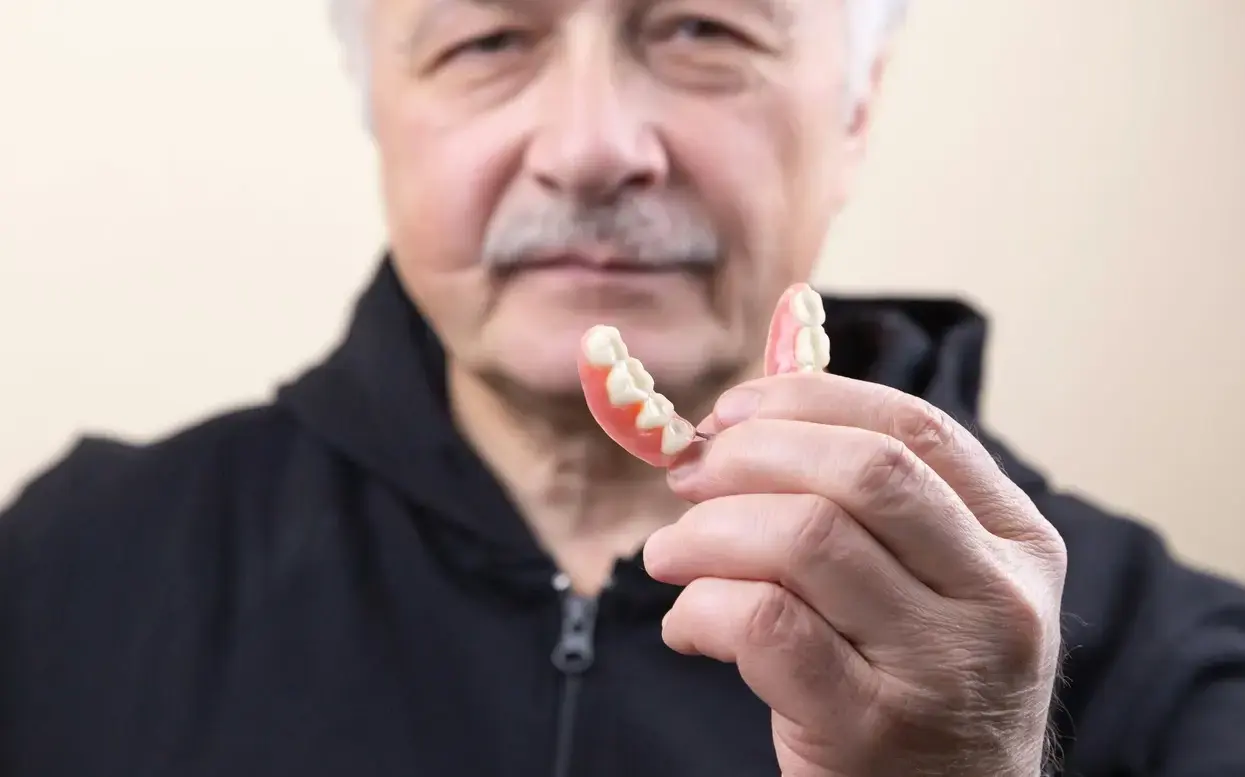


Dentures in San Diego cost about $1,240 per arch for a full denture in-network, $1,700 to $2,300 for a partial, around $2,200 for an immediate denture and about $5,600 for a snap-in lower denture on two implants. Our dentures in San Diego page covers each one. This blog will walk you through each type's cost and how to pay.
Denture cost depends first on the type: how many teeth it replaces, what holds it in place, and whether it goes in the day your teeth come out. The figures below are reference prices from insurer data and national averages. Your own quote follows an exam of your gums, jawbone and remaining teeth.
A full denture, also called a complete denture, replaces every tooth in the upper or lower jaw and rests on the gums. March 2026 California price data, compiled by PayorMap from the negotiated rates insurers publish under the federal Transparency in Coverage rule, puts the median in-network fee for a complete lower denture (code D5120) at $1,242.
CareCredit's dental cost list gives national averages of $1,968 for traditional upper and lower dentures and $6,514 for a premium set. Much of that gap is the teeth. Standard acrylic denture teeth cost less than highly cross-linked polymer teeth, which look more natural and resist wear better.
A partial denture replaces several missing teeth and clips to the natural teeth that remain, which also stops those teeth drifting into the gaps. CareCredit's national averages are $1,738 for a resin-based partial, $1,761 for a flexible nylon partial and $2,229 for a partial on a cast metal framework. An acrylic flipper, a light temporary partial often worn while a site heals, averages $605.
When only one or two teeth are missing side by side, a fixed dental bridge is worth pricing against a partial, since it is cemented in and never comes out.
An immediate denture is made before your teeth are removed and placed on the same day, so you never go without teeth while the gums heal. Impressions are taken before the extractions. CareCredit's national average is $2,178, and the extraction fees come on top: $177 for a simple extraction and $363 for a surgical one, per tooth, on the same national list.
Budget for what follows. The gums and bone change shape as the sockets heal, so expect adjustment visits, and Cleveland Clinic notes that your dentist often replaces the immediate denture with a final one once you have healed.
A snap-in denture clips onto implants placed in the jaw. On two lower implants it comes to about $5,600 at California in-network rates, the highest of the four types. The anchored implant dentures section below breaks that figure down line by line.
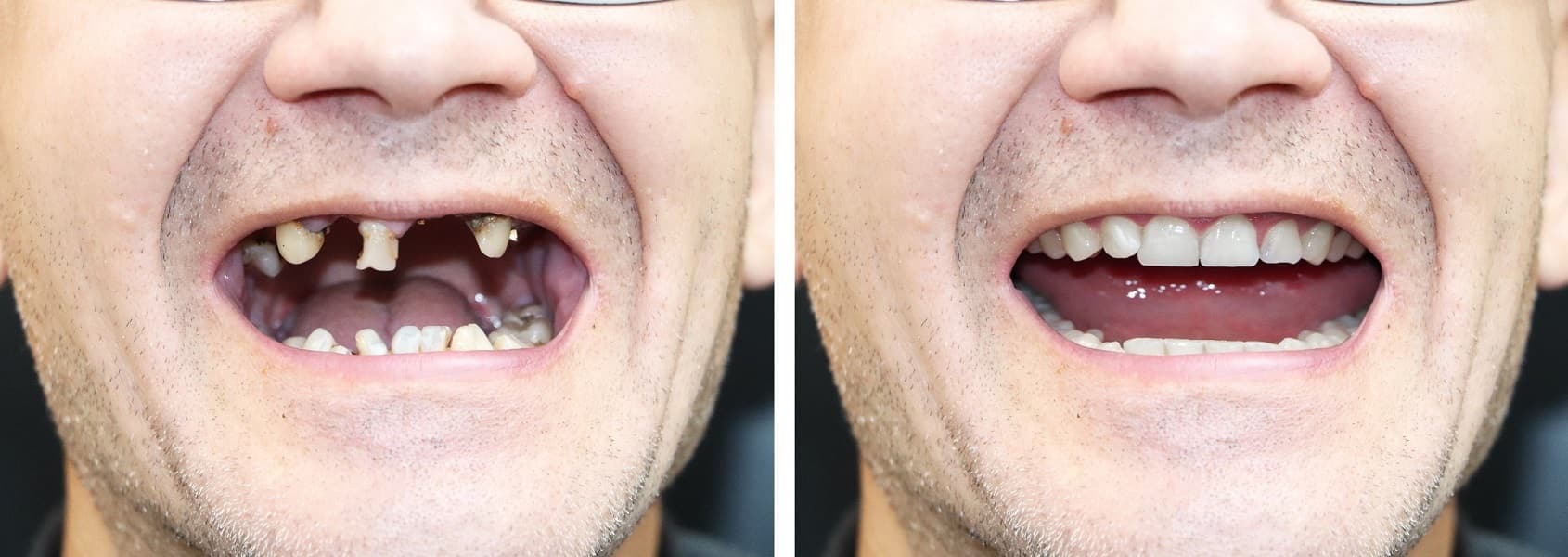
Two dentures of the same type can be priced hundreds of dollars apart, and these are the reasons:
Ask whether a quote includes the wax try-in and the adjustment visits after fitting. New dentures usually need small adjustments as they settle, and a low price that bills each one separately is not a saving.
A snap-in implant denture, also called an anchored denture or an implant overdenture, is a removable denture that clips onto dental implants instead of resting on the gums alone. Two implants are the usual starting point for the lower jaw. The McGill consensus statement, agreed at a 2002 symposium at McGill University, recommends a two-implant overdenture as the first-choice standard of care for a toothless lower jaw.
At March 2026 California in-network medians, a snap-in lower denture builds up like this:
That totals $5,572. If your current lower denture still fits well and can take the attachment housings, the implants and attachments alone come to $4,330. Neither figure includes the housings fitted inside the denture.
The extra cost buys retention. A conventional lower denture is the one most likely to lift when you talk or chew, and two implants hold it down. The trade is upkeep: the nylon inserts that grip the attachments wear and need replacing, and a 2010 systematic review by Çehreli and colleagues found these replacements became more frequent after 5 years.
The most affordable dentures are usually the ones insurance, pre-tax money and a payment plan share between them.
In 2026, adults on a Covered California dental HMO pay set copays under the 2026 Dental Copay Schedule: $400 for a complete or immediate denture, $325 for a resin partial and $375 for a metal or flexible partial. A full upper and lower set costs $800 in copays. Implants are not covered for adults on these plans, and most of them replace a denture once every 5 years. Covered California's dental PPO plans cap adult benefits at $1,500 a year, after a $50 deductible and a six-month wait. Nationally, ADA News reported in December 2025 that 32.8% of dental annual maximums sit between $1,000 and $1,500.
Medicare.gov states that in most cases Medicare does not cover dentures. Medi-Cal Dental lists complete and partial dentures among its covered services.
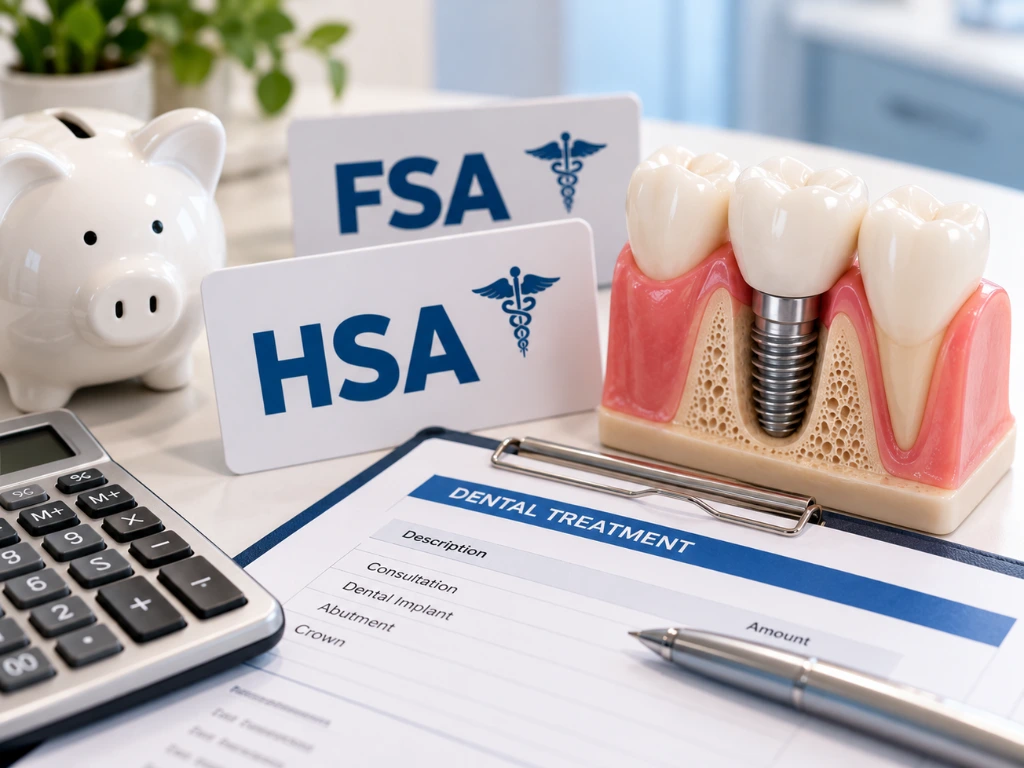
IRS Publication 502 says you can include in medical expenses "the amount you pay for artificial teeth", so HSA or FSA money pays for dentures. For 2026 the limits are $3,400 for a health FSA, $4,400 for a self-only HSA and $8,750 for a family HSA, so a $1,242 lower denture fits inside one year's FSA election.
Smiles By Design offers no-interest financing, and the team reviews your insurance and financing options at the consultation, before any treatment starts.
The right denture depends on how many healthy teeth you have left and how well your jaw holds a denture, more than on age.
Many people reach this decision after losing teeth to advanced gum disease. If you still have teeth worth saving, gum disease treatment can keep them as anchors for a partial rather than adding them to a full denture.
For older patients, the deciding factors are the same as for anyone: bone, gum health, the hand strength and dexterity to clean a denture or implants, and budget.
A denture costs less on the day it is fitted, and an implant lasts longer. Our dentures page puts the life of a denture at 5 to 10 years, and Cleveland Clinic gives an average of seven to 10 years before replacement. Relines in between keep the fit as the jaw changes.
The jaw change is the cost most people miss. After teeth are lost, the jawbone gradually shrinks, and a conventional denture resting on the gums does not stop it. That is why a denture that fitted well in year one feels loose by year five. Implants replace the root and survive well: a 2019 systematic review by Howe, Keys and Richards found 96.4% of implants still in place after 10 years.
A conventional denture now does not close the door on implants later. A well-fitting lower denture can sometimes be converted to a snap-in denture by adding two implants and attachments. Our article on dentures vs implants compares stability, chewing and upkeep in more detail.
Getting a denture at Smiles By Design starts with an exam and X-rays of your gums, jawbone and remaining teeth, then follows these steps:
Dr. Dan Javaheri leads the practice in Carmel Mountain Ranch. He graduated from the NYU College of Dentistry and has more than 17 years in general, cosmetic and implant dentistry, and the practice offers implant-supported dentures alongside conventional ones. Relines, rebases, crack repairs and replacement of worn parts are done in the same office, and patients rate the practice 5.0 across 212 Google reviews.
New dentures take practice. Start with softer foods, read aloud to get used to speaking with them, and expect the denture to settle into the gums over several days before your first check.
The American College of Prosthodontists guideline on denture care sets out the daily routine:
Most people take dentures out at night. Cleveland Clinic advises leaving them out for at least eight hours a day to rest the gums. Our denture aftercare instructions cover the first weeks and cleaning stains.
Without insurance, a complete lower denture has a California in-network median of $1,242, and CareCredit's national averages run from $1,738 for a resin partial to $1,968 for a traditional upper and lower set and $6,514 for a premium set. Extractions, relines and implant attachments are priced on top.
A full set of upper and lower dentures averages $1,968 nationally for traditional dentures and $6,514 for premium dentures on CareCredit's cost list. At the California in-network median, a single lower arch costs $1,242. On a Covered California dental HMO, an adult pays $800 in copays for both arches.
Anchored dentures, also called snap-in dentures, cost about $5,572 on two lower implants at March 2026 California in-network medians: $3,658 for the implants, $672 for two attachments and $1,242 for the denture. Converting a well-fitting existing denture costs about $4,330 for the implants and attachments.
Medicare.gov states that in most cases Medicare does not cover dentures. Medi-Cal Dental lists complete and partial dentures among its covered services. HSA money saved before Medicare enrolment can still pay for dentures, because IRS Publication 502 counts artificial teeth as a medical expense.
Most Covered California adult dental plans replace complete or partial dentures once every 5 years, and one plan once every 7 years, according to the 2026 adult benefits comparison. Private PPO plans set their own limit, so check the replacement clause in your plan documents before ordering a new set.
You can use HSA or FSA money for dentures. IRS Publication 502 says you can include in medical expenses the amount you pay for artificial teeth. The 2026 limits are $3,400 for a health FSA and $4,400 for a self-only HSA, enough to cover a lower denture at the California in-network median of $1,242.
Dentures last 5 to 10 years, and Cleveland Clinic puts the average at seven to 10 years. The jawbone keeps changing shape after tooth loss, so the denture needs a reline every one to two years to keep fitting, and a replacement once the teeth wear or the base no longer matches the gums.