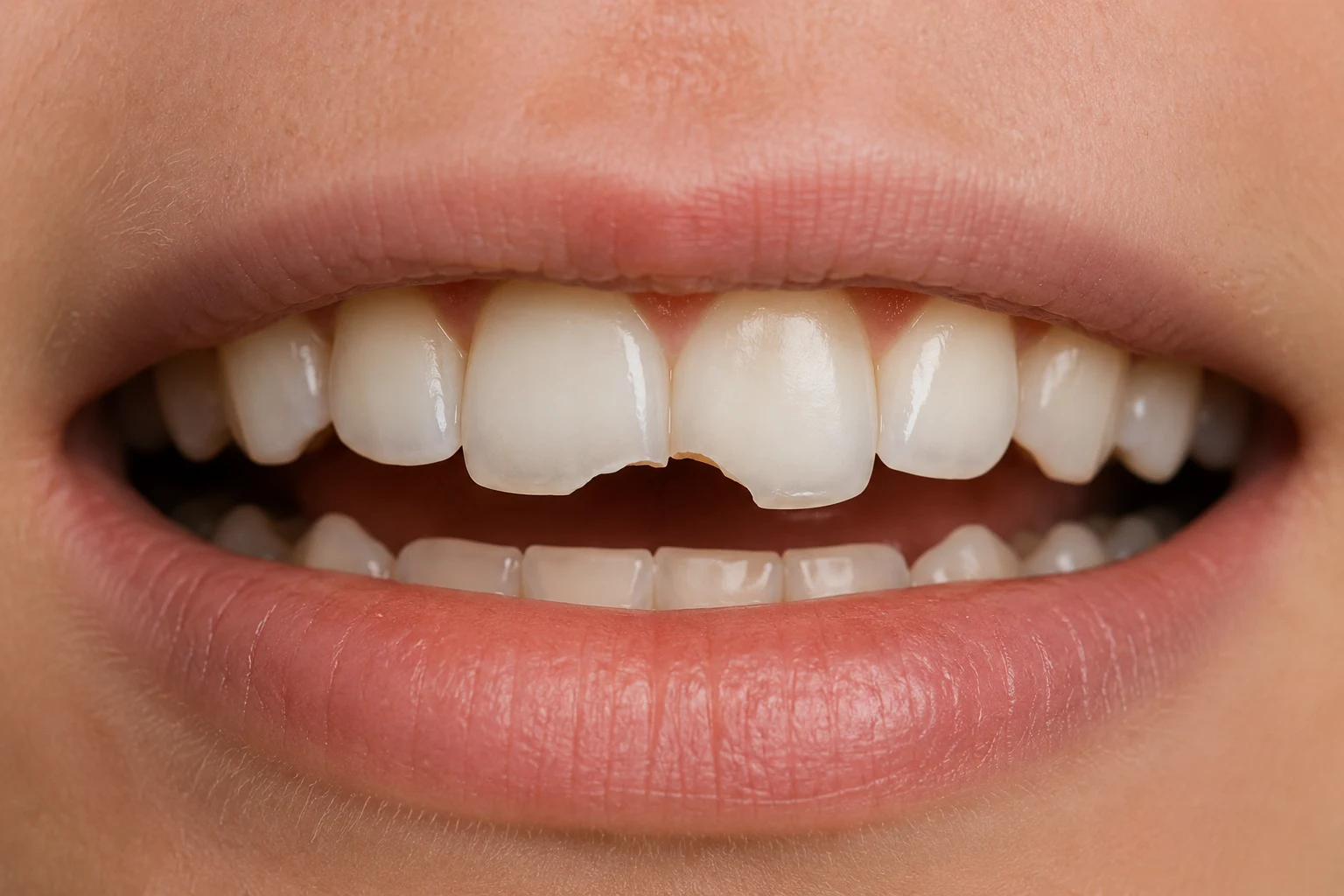


A chipped or broken tooth can happen out of nowhere, mid-meal, during a game, or after a fall. Some fractures look minor at first glance, but waiting around to deal with it raises your risk of pain, infection, or the damage getting worse.
Those first 24 hours actually matter a lot, what you do right after the injury can genuinely protect the tooth and improve your odds of a successful fix. Keep reading to explore what to do in the first 24 hours when experiencing a chipped or broken tooth.
A chipped tooth might only involve the outer enamel, or it could go deeper into the dentin or even the pulp, where the nerves and blood vessels actually live. Even if it doesn't hurt right away, untreated damage tends to get worse over time. Getting it looked at quickly can tell you whether you need simple bonding, a crown, root canal treatment, or something else entirely.
Check your mouth carefully with a mirror. Look for:
If there's heavy bleeding, facial trauma, or you can't close your jaw properly, get emergency medical or dental care right away, don't wait this one out.
Rinse gently with warm water to clear out blood, dirt, and debris. It keeps the area clean and lowers the risk of infection. Skip water that's very hot or very cold, the damaged tooth is probably extra sensitive right now.
If you find pieces of the tooth, hang onto them and bring them to your dentist. Sometimes the fragment can actually get bonded back on, which gives you a more natural-looking result. Handle it gently and keep it in a clean container until your appointment.
If there's bleeding, put clean gauze over the area and apply gentle pressure for about 10 minutes, or until it stops. If it keeps going or gets heavy, get professional care immediately.
A cold compress or ice pack wrapped in a cloth, held against the outside of your cheek for 10 to 15 minutes at a time, helps reduce swelling and provides temporary pain relief.
If the broken edge feels sharp, cover it temporarily with dental wax or temporary dental cement, both easy to find at most pharmacies. It stops the edge from cutting your tongue or cheek until you can actually see your dentist.
Until your appointment, avoid chewing on the injured side entirely. Stick with yogurt, mashed potatoes, soup, scrambled eggs, smoothies, oatmeal, and that kind of thing. Skip anything hard, crunchy, sticky, or extremely hot or cold, it'll just aggravate things.
A few common mistakes can genuinely make things worse. Avoid:
Even a tiny chip can expose the tooth to bacteria and raise the risk of bigger problems down the line.
Get in touch with a dentist as soon as you can if you notice:
Getting treatment early usually means a more conservative fix with a better shot at success.
Related Blog:
A chipped or broken tooth shouldn't get brushed off, even when the damage looks small. Taking the right steps in the first 24 hours genuinely helps limit pain, prevent further damage, and improve the odds of saving the natural tooth.
If you're dealing with a dental emergency, the team at Smiles By Design Dentistry of San Diego provides full emergency dental care with treatment plans built around restoring both the health and look of your smile.
Whether it's bonding, crowns, root canal treatment, or more advanced restorative work, Smiles By Design Dentistry of San Diego is committed to fast, genuinely compassionate, high-quality care that gets you smiling confidently again. For more information or to schedule an appointment, visit Smiles By Design Dentistry of San Diego.