February 17, 2026
Dental Implants vs. Dentures: Which Tooth Replacement Option Truly Protects Your Future?


Losing teeth changes more than your smile. It alters how you chew, how you speak, and even how your facial structure ages over time. Many patients exploring tooth replacement hear surface-level pros and cons. What’s rarely explained clearly is how these options perform five, ten, or fifteen years down the road.
If you're trying to decide between dental implants and dentures, this guide breaks down the real differences in stability, comfort, bone preservation, and long-term investment.
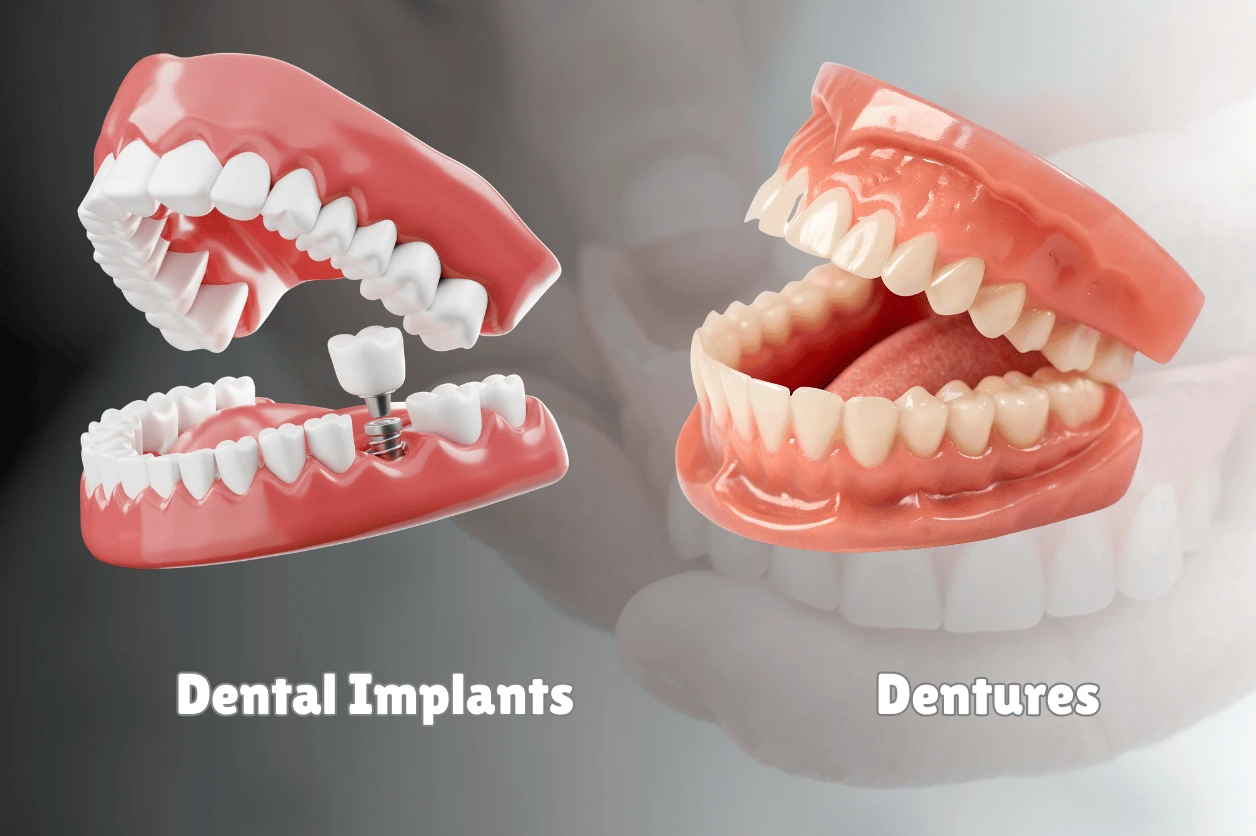
Dental implants are biocompatible titanium posts placed into the jawbone to replace missing tooth roots. Once positioned, the bone integrates with the implant in a process known as osseointegration. After healing, a custom crown, bridge, or full-arch restoration is secured on top.
Because implants anchor directly into bone, they function like natural teeth.
They can replace:
According to the American Dental Association, dental implants are a predictable and long-term option for tooth replacement when properly maintained.
At Smiles By Design, advanced CBCT 3D imaging and guided surgical planning are used to optimize implant positioning and long-term success for patients from Rancho Bernardo, Carmel Mountain Ranch, 4S Ranch, and surrounding North County communities.
Dentures are removable prosthetic appliances designed to replace missing teeth and supporting tissue.
There are three primary types:
Traditional dentures sit on the gums and rely on suction, adhesives, and muscular control for stability.
The Cleveland Clinic explains that while dentures restore appearance and basic function, they do not prevent jawbone shrinkage over time.
Here’s what patients commonly notice after living with each option:
Implants:
Fixed and secure. No slipping while speaking, laughing, or eating.
Dentures:
May shift or lift—especially lower dentures. Adhesives are often required for confidence.
Implants:
Restore most natural biting force. Crunchy vegetables, steak, and firm foods are manageable again.
Dentures:
Chewing strength is significantly reduced. Sticky or hard foods may be avoided.
Implants:
Feel natural. No bulky acrylic covering the palate in upper cases.
Dentures:
Can create pressure points, sore spots, or altered taste perception.
Implants:
Brush and floss like natural teeth. Routine teeth cleaning visits help maintain long-term success.
Dentures:
Remove nightly, soak in cleaning solution, and clean separately.
Implants:
With proper care, they can last decades.
Dentures:
Typically require relines or replacement as bone structure changes.
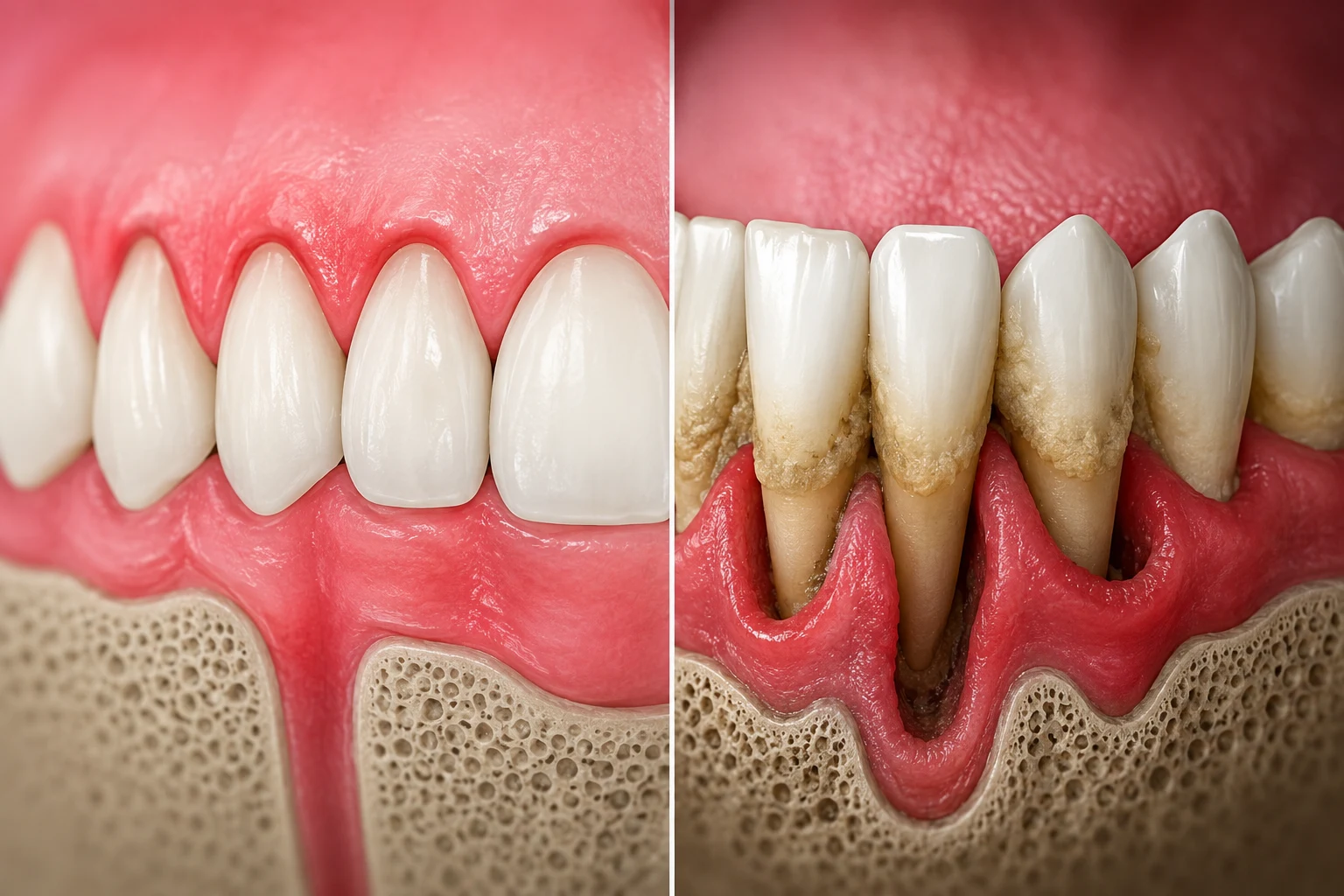
When teeth are lost, the jawbone begins shrinking due to lack of stimulation. This process, called resorption, continues over time.
Traditional dentures rest on the gums and do not stimulate the bone. As bone shrinks:
Research published by the National Institutes of Health (NIH) confirms that bone resorption accelerates after tooth loss when roots are not replaced.
Dental implants are the only common solution that transfers chewing forces into the bone, helping preserve bone density and facial contours long-term.
This biological difference is why implants are often considered the gold standard for structural tooth replacement.
Dentures can be appropriate when:
Implant-supported overdentures provide improved stability while remaining removable, offering a middle-ground approach.
Candidates typically have:
A comprehensive exam with digital X-rays and 3D imaging is necessary before determining suitability.
In some cases, procedures such as bone grafting or restorative support with dental crowns may be part of a complete treatment plan.
If you value:
Dental implants are often the stronger investment.
If you prefer:
Dentures may still meet your goals.
The decision ultimately depends on oral health, long-term expectations, and lifestyle priorities.
Located in Rancho Bernardo (92128), Smiles By Design serves patients from Carmel Mountain Ranch, 4S Ranch, Poway, and surrounding communities with comprehensive restorative and cosmetic dentistry.
The practice focuses on:
Whether replacing a single tooth or restoring a full arch, the goal is long-term stability—not temporary fixes.
If you're considering dental implants or dentures and want a clear, pressure-free explanation of your options, schedule a personalized evaluation.
Smiles By Design
15373 Innovation Drive #110
San Diego, CA 92128