February 10, 2026
Invisalign vs Braces: Choosing the Right Path to Your Perfect Smile


Deciding to straighten your teeth is a significant investment in your confidence and oral health. However, the most common dilemma patients face today is choosing between Invisalign vs braces. Both methods are highly effective at correcting misalignments, but they offer vastly different experiences in terms of aesthetics, comfort, and daily maintenance.
At Smiles By Design Dentistry of San Diego, we believe that understanding the mechanics and lifestyle implications of each option is the key to a successful transformation. In this comprehensive guide, we will break down everything from the invisalign vs traditional braces experience to a detailed invisalign vs braces cost comparison to help you make an informed decision.
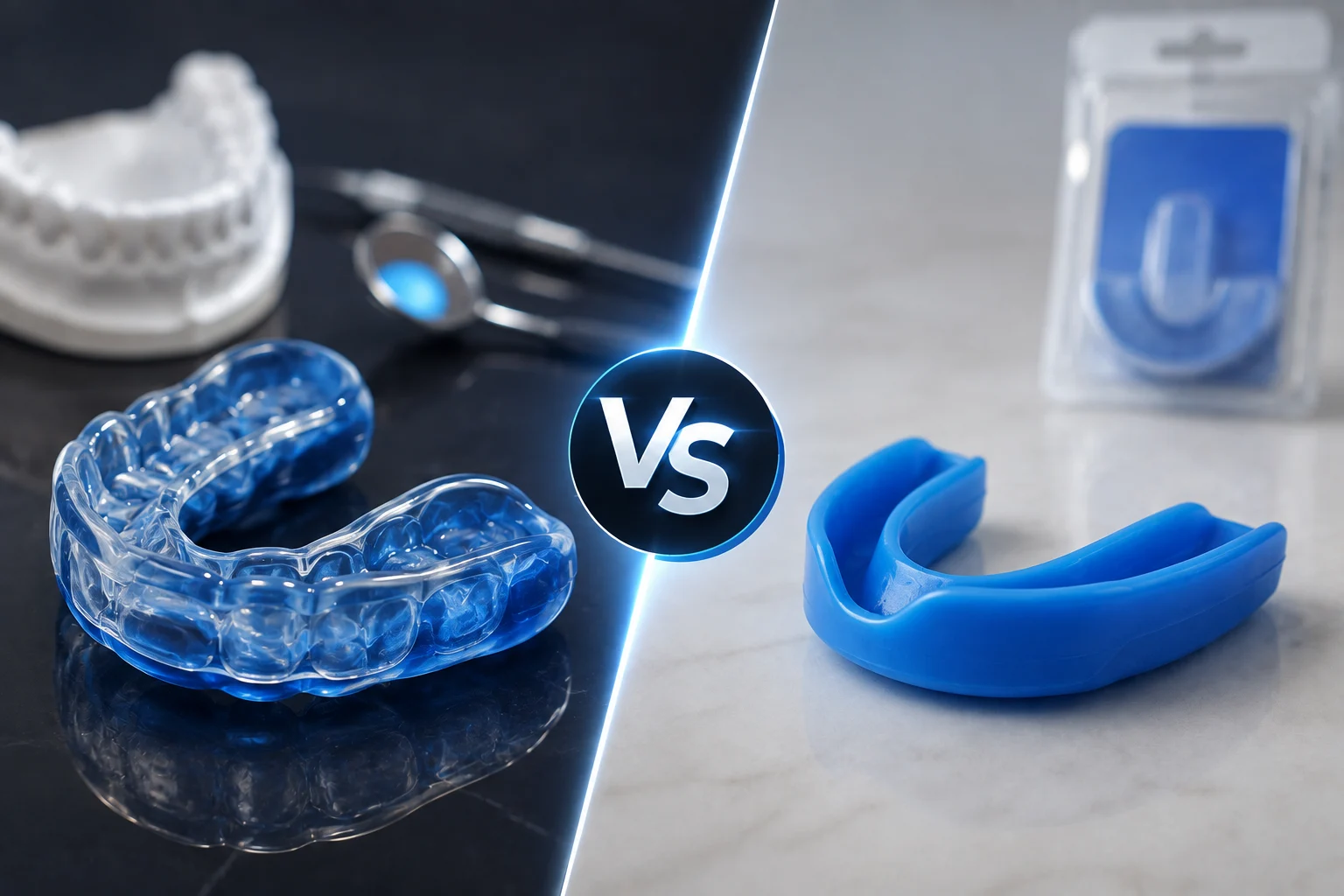
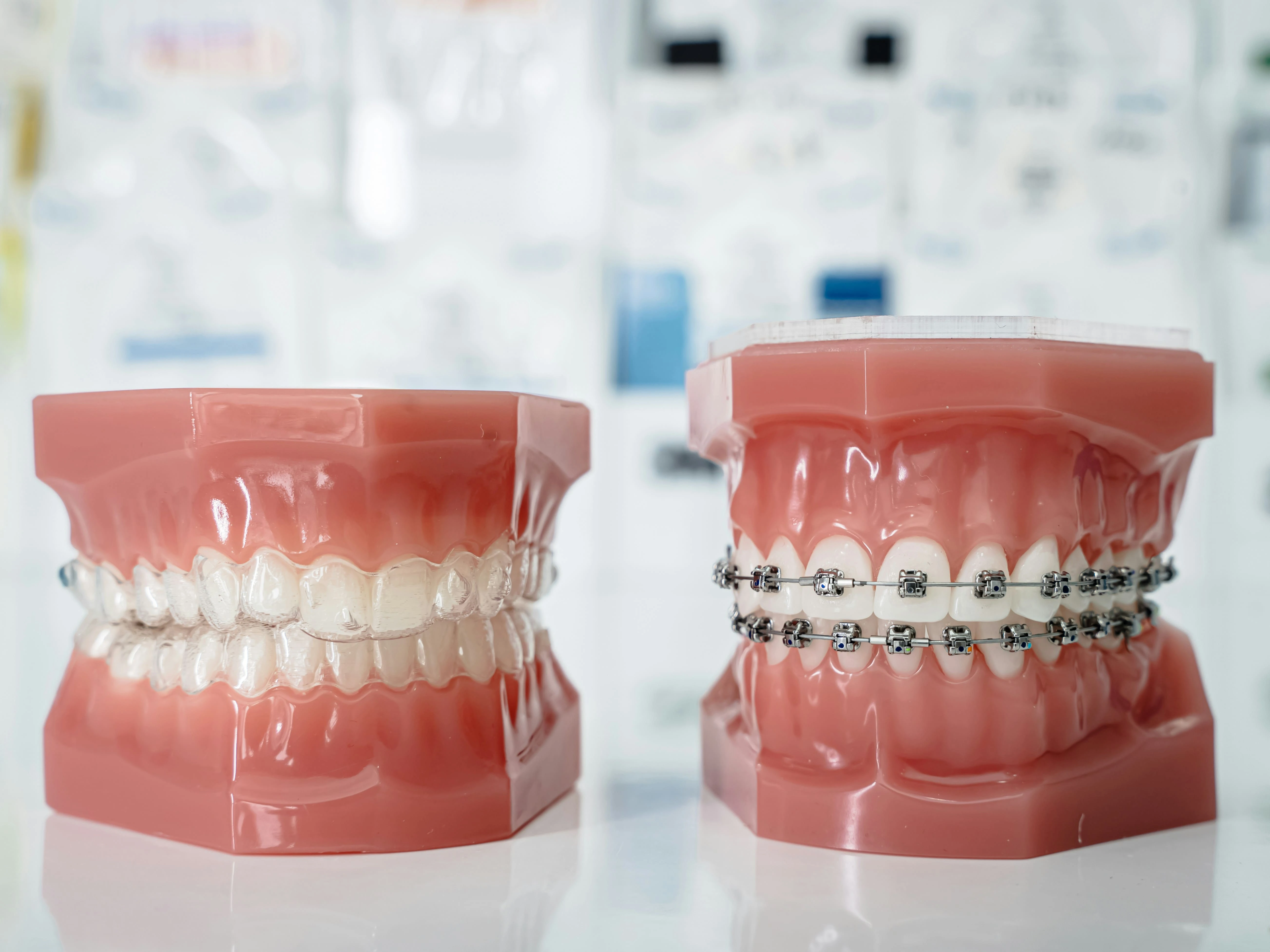
Invisalign is a modern orthodontic system that uses a series of clear, removable trays to gradually straighten teeth. Unlike traditional methods, invisalign aligners are made from a patented, medical-grade thermoplastic material called SmartTrack, which is designed to fit precisely over your dental arches. Each set of aligners is custom-made for the patient through advanced 3D imaging technology.
What makes Invisalign unique is its "invisible" nature and the fact that it is not permanently fixed to the teeth. Patients wear each set of trays for about one to two weeks before moving to the next in the series, slowly shifting the teeth into their ideal positions. Because they are removable, they allow for easier eating and cleaning, making them a top choice for those seeking a lifestyle-friendly orthodontic solution. You can find more details about this technology on our Invisalign service page.
Braces, often referred to as traditional or metal braces, are fixed orthodontic appliances used to correct teeth and jaw alignment issues. They consist of small brackets (made of stainless steel or ceramic) that are bonded directly to the front of each tooth. These brackets are connected by a thin metal wire, known as an archwire, which is held in place by tiny elastic bands or "ligatures."
The way braces work is through constant, guided tension. By periodically tightening the archwire, the orthodontist applies pressure to the teeth, moving them in specific directions and even changing the shape of the jaw over time. While invisalign vs traditional braces is a common debate for aesthetic reasons, braces remain the gold standard for treating severe overcrowding, large gaps, and complex bite issues that require high levels of force and precision.
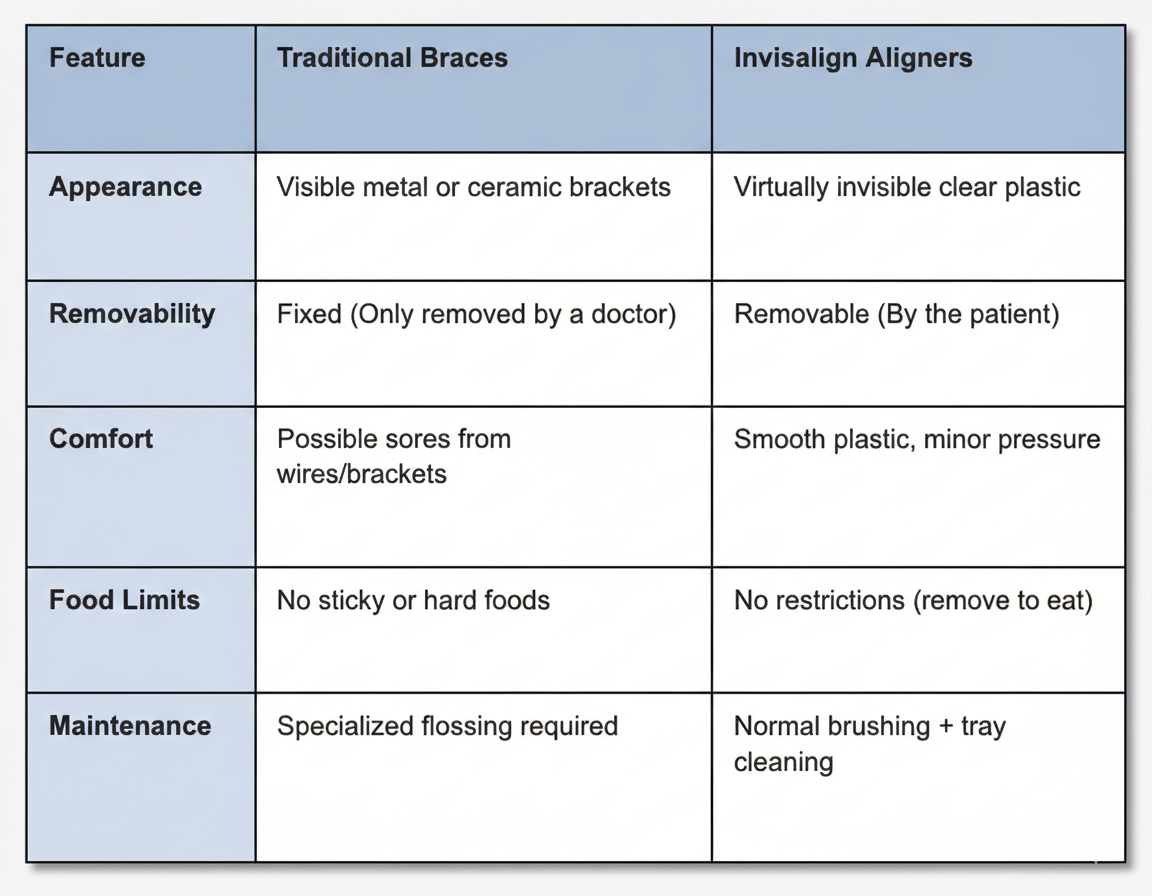
When comparing invisalign vs traditional braces, the most obvious difference is visibility. Metal braces vs invisalign is a classic debate; traditional braces use stainless steel brackets and wires to "pull" teeth into place, while Invisalign uses a series of clear, removable plastic trays to "push" them.
For those who prefer a middle ground, clear braces vs invisalign is another popular comparison. Clear (ceramic) braces function just like metal ones but use tooth-colored brackets to blend in. However, they still involve wires and remain fixed to your teeth, whereas Invisalign offers the freedom to remove the appliance for eating and cleaning. You can learn more about these options on our Invisalign service.
One of the most frequent questions we hear is about the invisalign vs braces cost. Historically, clear aligners were significantly more expensive, but in 2026, the cost of invisalign vs braces has become much more competitive.
In a typical invisalign vs braces cost comparison, you might find the following:
The braces vs invisalign price often depends more on the complexity of your case and the duration of treatment than the material itself. For a deeper dive into the financial aspects, check out our detailed post on what does Invisalign cost. Ultimately, the invisalign cost vs braces is often comparable once insurance and flexible payment plans are factored in.
When weighing braces vs invisalign pros cons, it’s essential to look at both lifestyle and clinical outcomes. Invisalign vs braces results are usually identical for mild to moderate cases, but for complex tooth rotations or severe vertical movements, traditional braces often have the upper hand because they provide more torque.
For specific issues like a "bad bite," braces vs invisalign for overbite correction can be successful with either method, though braces are often faster for severe jaw misalignments.
When patients ask, "is invisalign better than braces?" the answer isn't a simple yes or no—it depends entirely on your clinical needs, lifestyle, and personal discipline. Both systems are designed to move teeth into alignment, but they excel in different areas.
From a lifestyle and aesthetic perspective, Invisalign is often considered superior. The ability to remove your aligners for photos, weddings, or important business meetings provides a level of freedom that traditional braces simply cannot match. Furthermore, because there are no metal brackets to irritate the soft tissues of your mouth, most patients find Invisalign to be significantly more comfortable for daily wear. If your goal is to straighten your teeth without anyone noticing, then invisalign vs traditional braces is a clear win for the aligners.
However, from a clinical perspective, "better" might mean something different. For extremely complex orthodontic issues—such as severely rotated teeth, large gaps, or significant vertical movements—traditional braces are often the more powerful tool. Braces provide a level of torque and control that allows orthodontists to manage difficult cases with high precision. Additionally, since braces are fixed, they are "better" for patients who might lack the discipline to wear their aligners for the required 22 hours a day.
In summary, for the majority of moderate orthodontic cases, Invisalign is just as effective as braces but offers much higher levels of comfort and convenience. To see which path is the most effective for your specific dental anatomy, we recommend a full Invisalign consultation at Smiles By Design Dentistry of San Diego.
The right choice often depends on the age and maturity of the patient. Invisalign vs braces for teenager patients is a common discussion for parents. Teens love the "invisible" look, but they must be responsible enough to keep the trays in. Conversely, invisalign vs braces for kids (Phase 1 treatment) is becoming more common, though many dentists still prefer the "set it and forget it" nature of fixed braces for younger children.
On the other hand, adult braces vs invisalign is almost always won by Invisalign in terms of popularity. Most adults prefer the professional appearance of clear aligners over the "metal mouth" look, especially in workplace environments.
The price gap has narrowed significantly. While how much is invisalign vs braces depends on your location and specific needs, both usually start around $3,000. Invisalign may lean slightly higher for very complex cases due to the technology and laboratory costs involved in manufacturing custom trays.
When asking how long does invisalign take vs braces, the answer is often surprising. For mild crowding, Invisalign can be faster, sometimes finishing in 6 to 12 months. However, for complex structural changes, braces may be more efficient, typically taking 18 to 24 months.
How do braces feel the first day vs invisalign is a matter of "pressure vs. irritation." On the first day of braces, you will feel significant pressure and likely some irritation on your cheeks from the metal. With Invisalign, the first day brings a sensation of tightness and a "full" feeling in the mouth, but without the sharp edges that cause sores.
In the debate of braces vs invisalign for overbite, both are capable. Invisalign uses "SmartForce" attachments and elastics to move the jaw. However, traditional braces are often more reliable for severe skeletal overbites that require significant structural shifting.
Yes, it is often possible to switch. Some patients start with braces to handle complex movements and finish with Invisalign for the final "polishing" phase. This hybrid approach ensures the best invisalign vs braces results for difficult cases.
Choosing between Invisalign vs braces is a big decision, but you don't have to make it alone. At Smiles By Design Dentistry of San Diegon, our expert orthodontic team is dedicated to helping you find the treatment that aligns with your lifestyle and your budget. Whether you want the precision of traditional braces or the freedom of clear aligners, we are here to ensure your results are nothing short of perfection.
Schedule your consultation at Smiles By Design Dentistry of San Diego today! Let us help you compare your options in person and design the smile you’ve always dreamed of.