


Gum disease prevention centers on daily plaque control, professional dental cleanings, and early identification of inflammation before permanent damage occurs. Gum disease begins as gingivitis—reversible inflammation of the gums caused by bacterial biofilm accumulation. Without intervention, it can progress to periodontitis, which involves bone loss and potential tooth instability. Prevention includes brushing twice daily with fluoride toothpaste, flossing to remove interdental plaque, maintaining regular dental examinations, managing systemic risk factors such as diabetes, and avoiding tobacco use. Early care is critical because gum disease often progresses painlessly in its early stages.
Introduction
Gum disease remains one of the most common chronic inflammatory conditions affecting adults in the United States. Despite being largely preventable, it continues to contribute to tooth loss, bone deterioration, and systemic inflammatory burden.
The early stages are subtle. Many patients do not recognize the warning signs until irreversible damage has occurred. Understanding how gum disease develops—and how to prevent it—forms the foundation of long-term oral health.
At Smiles By Design Dentistry of San Diego, prevention-focused care emphasizes early detection, risk assessment, and consistent maintenance to reduce progression before structural compromise occurs.
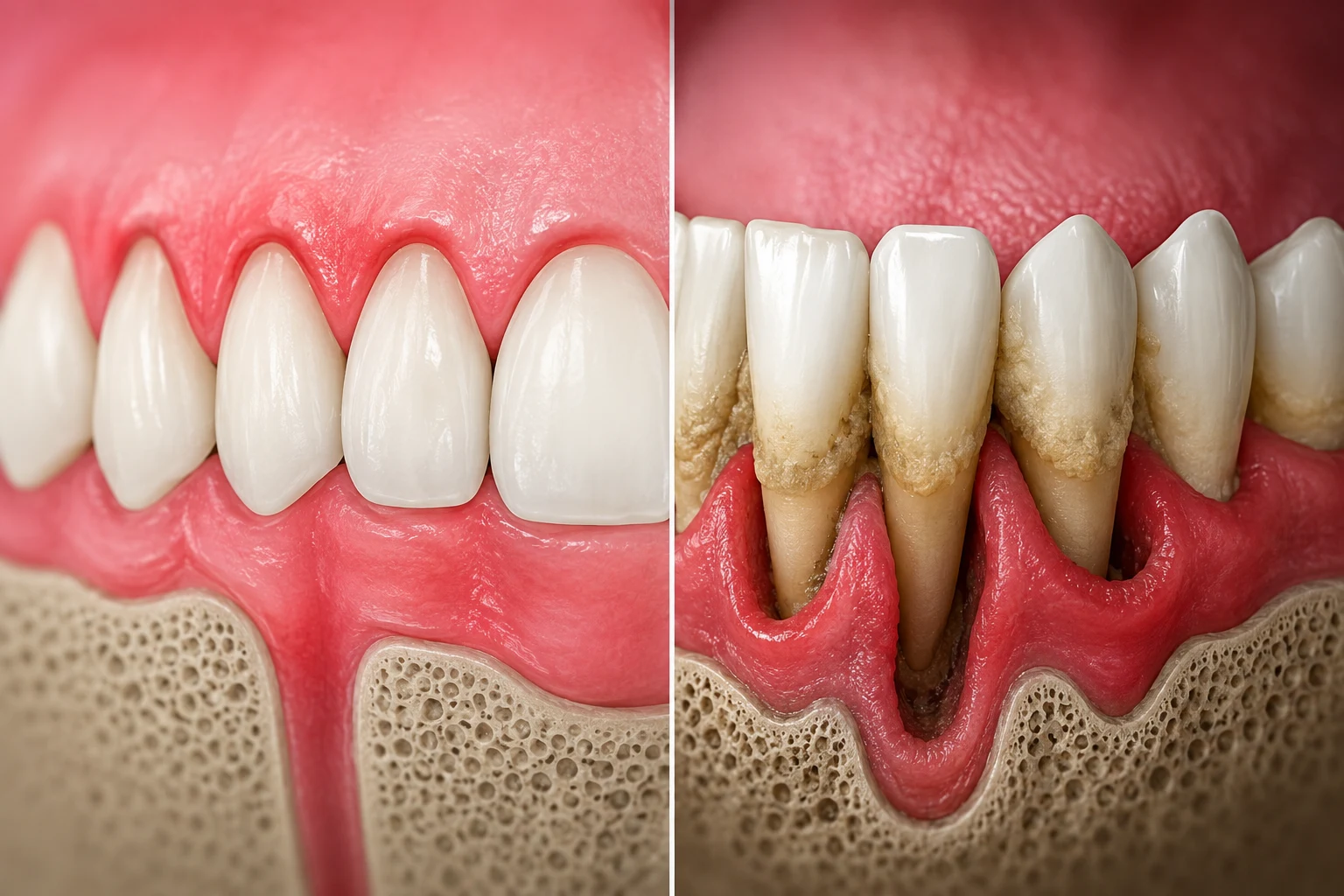
Gum disease, or periodontal disease, is an inflammatory condition affecting the tissues that support teeth. It begins as gingivitis, characterized by redness and bleeding of the gums. When untreated, it may progress to periodontitis, where inflammation extends deeper, causing bone loss and attachment destruction.
Gum disease is not simply a surface infection—it is a chronic inflammatory process involving bacterial biofilm and host immune response.
Dental plaque is a structured biofilm composed of bacteria embedded in a protective matrix. When plaque accumulates along the gumline, toxins produced by bacteria trigger an immune response.
In gingivitis, inflammation is limited to soft tissue. This stage is reversible with proper hygiene.
In periodontitis, inflammation leads to destruction of connective tissue fibers and alveolar bone. As bone resorbs, periodontal pockets form, allowing further bacterial colonization.
Importantly, bone loss is irreversible without surgical intervention. This progression explains why early prevention is critical.
Gum disease develops primarily due to inadequate plaque removal. However, additional risk factors include:
While bacteria initiate disease, systemic health and immune response influence severity.
Early gingivitis may present with:
Advanced periodontitis may involve:
Notably, pain is often absent until advanced stages.
Occasional minor gum bleeding during aggressive brushing may occur in healthy individuals. However, consistent bleeding is not normal.
Healthy gums are firm, pale pink, and do not bleed easily.
Chronic bleeding, swelling, or recession indicates inflammatory disease rather than temporary irritation.
Distinguishing normal variation from persistent inflammation is essential.
Evaluation is recommended if:
Early intervention may reverse gingivitis before bone involvement occurs.
Diagnosis involves:
Probing depths greater than 3 mm may indicate periodontal disease.
Early-stage gingivitis shows no bone loss. Periodontitis presents measurable attachment loss.
Treatment depends on stage.
Gingivitis typically requires improved home hygiene and professional cleaning.
Early periodontitis may require scaling and root planing (deep cleaning) to remove subgingival plaque.
Advanced cases may involve surgical intervention to reduce pockets and regenerate bone.
Prevention remains less invasive and more predictable than corrective treatment.
Professional dental cleaning removes hardened plaque (calculus) that cannot be eliminated by brushing alone.
Scaling and root planing smooth root surfaces to discourage bacterial reattachment.
In advanced cases, flap surgery may be used to access deeper deposits.
While effective, these procedures treat disease—they do not replace prevention.
Untreated periodontal disease may lead to:
Research links severe periodontitis to systemic conditions including cardiovascular disease and diabetes complications.
Although causality remains complex, inflammation appears to play a role.
Gingivitis is fully reversible with proper hygiene.
Periodontitis can be controlled but not fully reversed once bone loss occurs.
Long-term stability depends on:
With consistent care, progression can often be halted.
Effective gum disease prevention treatment includes:
Prevention focuses on disrupting plaque biofilm before inflammation progresses.
Reversibility
Gingivitis: Yes — inflammation of the gums is reversible with proper cleaning and oral hygiene.
Periodontitis: No — bone loss that occurs is permanent, though the disease can be controlled.
Bone Loss
Gingivitis: No bone loss occurs at this stage.
Periodontitis: Yes — infection damages the supporting bone around the teeth.
Bleeding Gums
Gingivitis: Common, especially during brushing or flossing.
Periodontitis: Also common and often accompanied by deeper gum inflammation.
Tooth Mobility
Gingivitis: Teeth remain stable.
Periodontitis: Teeth may become loose as supporting bone and ligaments weaken.
Treatment
Gingivitis: Professional cleaning combined with improved home oral hygiene.
Periodontitis: Deep cleaning (scaling and root planing) and, in some cases, surgical treatment.
Prognosis
Gingivitis: Excellent when treated early and oral hygiene is maintained.
Periodontitis: Manageable with ongoing periodontal care and maintenance.
Bleeding gums are not normal.
Mouthwash alone does not prevent gum disease.
Gum recession is not only age-related.
Gum disease does not always cause pain.
Education reduces delayed diagnosis.
Yes, in most cases gum disease can be prevented with twice-daily brushing, daily flossing, and professional cleanings every 6 months. However, some patients have genetic risk factors that require more frequent monitoring. Early-stage gingivitis is fully reversible with proper care.
Gingivitis is reversible. Periodontitis is manageable but not fully reversible.
Most individuals benefit from cleanings every six months, though higher-risk patients may require more frequent visits.
Severe inflammation may contribute to systemic inflammatory burden.
Gum disease prevention requires consistency rather than complexity. Daily plaque control, regular professional evaluations, and early response to inflammation can preserve bone and maintain long-term oral stability. Because early stages often progress silently, proactive care remains the most reliable strategy for protecting both oral and systemic health.
Dr. Dan Javaheri, a graduate of the New York University College of Dentistry, emphasizes that gum disease prevention begins with early inflammation detection rather than late-stage intervention. With advanced training in restorative and implant dentistry and certification through the California Academy of Implant Dentistry, he integrates periodontal monitoring into routine examinations. Research involvement associated with the National Institutes of Health and UC Davis Medical Center supports an evidence-based understanding of inflammatory disease progression. At Smiles By Design Dentistry of San Diego, prevention-centered care aims to reduce structural compromise before surgical intervention becomes necessary.