August 3, 2026
Teeth Whitening at Home vs. In-Office in San Diego: Which Actually Works Better?


Teeth whitening is one of the most popular cosmetic dental treatments for people who want a brighter, more confident smile. When exploring whitening options, patients typically consider two main approaches: at-home teeth whitening and professional in-office teeth whitening.
Store shelves are filled with whitening products, including strips, gels, toothpastes, trays, and DIY whitening kits. With so many options available, many people wonder whether professional teeth whitening is worth the additional cost.
Both at-home and in-office whitening can help improve the appearance of stained or discolored teeth. However, the two approaches differ significantly in whitening strength, treatment time, customization, comfort, professional supervision, and the predictability of results.
Keep reading to explore the advantages and limitations of each option so you can better understand which teeth whitening approach may suit your smile goals, budget, and lifestyle.
Before comparing at-home and in-office whitening, it helps to understand why teeth become stained or discolored.
Common causes may include:
The type and cause of discoloration can influence how well teeth respond to whitening treatment.
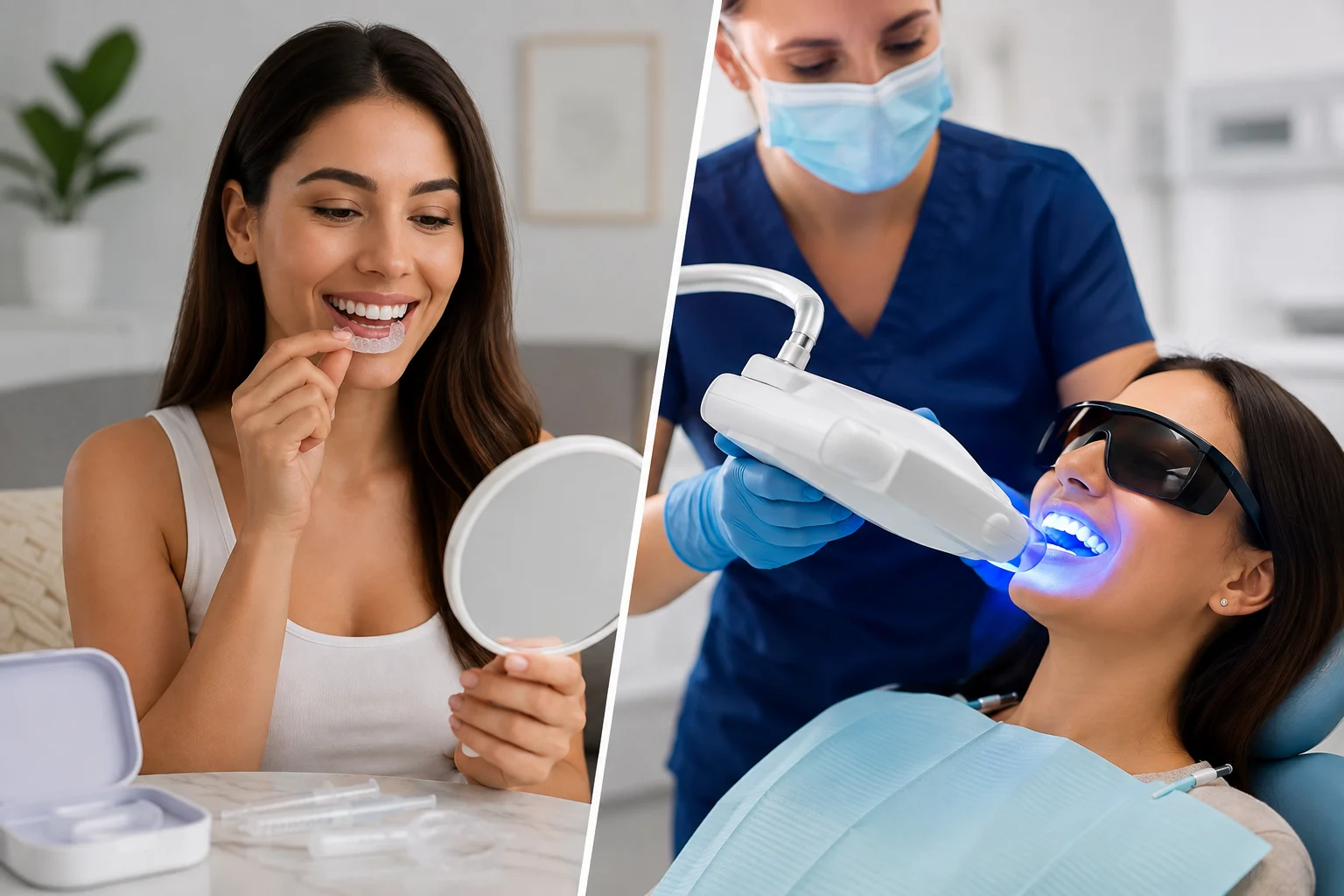
At-home teeth whitening includes over-the-counter products such as whitening strips, trays, gels, pens, and whitening toothpastes.
These products generally use lower concentrations of whitening agents than professional in-office treatments, which means results may develop more gradually.
Many people choose at-home whitening because it is generally more affordable and convenient. Treatment can be completed on your own schedule without visiting a dental office.
Potential benefits include:
Although at-home products can be convenient, they also have limitations.
Factors to consider include:
In-office teeth whitening is performed by a dental professional using professional-strength whitening agents.
During treatment, protective measures are used to help shield the gums and surrounding oral tissues. Because the procedure is professionally supervised and tailored to the patient’s needs, in-office whitening may provide faster and more predictable results for appropriate candidates.
Many patients choose professional whitening because it can produce noticeable results in a shorter period.
The treatment can be adjusted based on your current tooth color, type of discoloration, oral health, sensitivity concerns, and treatment goals.
Potential benefits include:
In-office whitening may not be appropriate for every patient, and there are several factors to consider before treatment.
Potential limitations include:
A dental evaluation can help determine whether professional whitening is appropriate based on your oral health and existing dental restorations.
The better option depends on your goals, the type of discoloration, your sensitivity level, budget, and how quickly you want to see results.
At-home whitening may be appropriate for mild staining and patients who prefer a gradual, lower-cost approach. In-office whitening may be better suited for patients seeking faster results, professional supervision, and a treatment plan tailored to their individual needs.
At-home teeth whitening may be suitable for mild discoloration and patients who prefer a convenient, gradual approach. However, results may take longer to appear and may be less noticeable depending on the type of staining.
In-office teeth whitening may provide faster and more predictable results while allowing the treatment to be customized and professionally supervised.
If you are considering teeth whitening and want help determining the most appropriate option for your smile, Smiles By Design Dentistry of San Diego can evaluate the possible causes of discoloration and recommend a treatment plan based on your individual needs and goals.
Our dental team provides personalized cosmetic dental care focused on helping patients improve the appearance of their smiles while supporting overall oral health.
At-home whitening products may help improve mild surface staining, although results generally develop more gradually than professional whitening.
Professional whitening uses professionally supervised treatment and may provide faster and more predictable results for appropriate patients.
In-office treatment generally provides visible results more quickly than over-the-counter whitening methods.
Common causes include coffee, tea, red wine, tobacco use, age-related changes, certain medications, inconsistent oral hygiene, and dark-colored foods or drinks.
Whitening toothpaste may help reduce some surface staining, but its results are generally more gradual and limited than bleaching-based treatments.
Temporary sensitivity can occur with both at-home and professional whitening products.
Crowns, veneers, and fillings do not respond to whitening agents in the same way as natural tooth structure.
Professional whitening can be planned based on your oral health, existing tooth color, staining, sensitivity, and cosmetic goals.
Some deeper or resistant discoloration may respond less effectively to over-the-counter products. A dental evaluation can help determine which treatment is appropriate.
Consider your budget, type of staining, sensitivity, desired timeline, and cosmetic goals. A dentist can help determine which option is most appropriate.