

From extraction to final crown, a dental implant takes about 3 months if your dentist places the implant on the same day. If your gum heals first, plan on 4 to 7 months, and if the socket needs a bone graft, 8 to 12 months. Each path includes at least 2 months of bone healing before you get the permanent crown. We wrote this guide for San Diego patients who are losing a tooth now and want to plan the next steps.
March 2026 California data puts the implant itself at a median $1,829. The steps below apply to all of our single and full-mouth implant options.
Each path comes down to how long your socket heals before the implant goes in. The International Team for Implantology (ITI), the largest professional body in implant dentistry, defines them in its 2018 consensus on placement and loading protocols:
Each total includes the ITI’s conventional loading window, which allows more than 2 months between implant placement and the final crown, plus the time the lab needs to make the crown.
Immediate placement saves the most time and holds up well. The same ITI consensus reported 98% survival for immediate placement with an immediate or early tooth, and 96% with conventional loading. The trade-off is how the gum looks. In an ITI review, Stephen Chen and Adam Hamilton noted that “20% to 30% of immediate implants were at risk of mid-facial mucosal recession of 1 mm or more”, which means the gum shrinking back at the front of the tooth.
We choose the path based on your bone. If the socket walls are intact, there’s no active infection and the facial bone is thick, we place the implant on extraction day. For a front tooth with thin facial bone, early placement at 4 to 8 weeks protects your gumline and adds only a few weeks. Chen and Hamilton report that thin facial bone resorbs about three times more than thick bone.
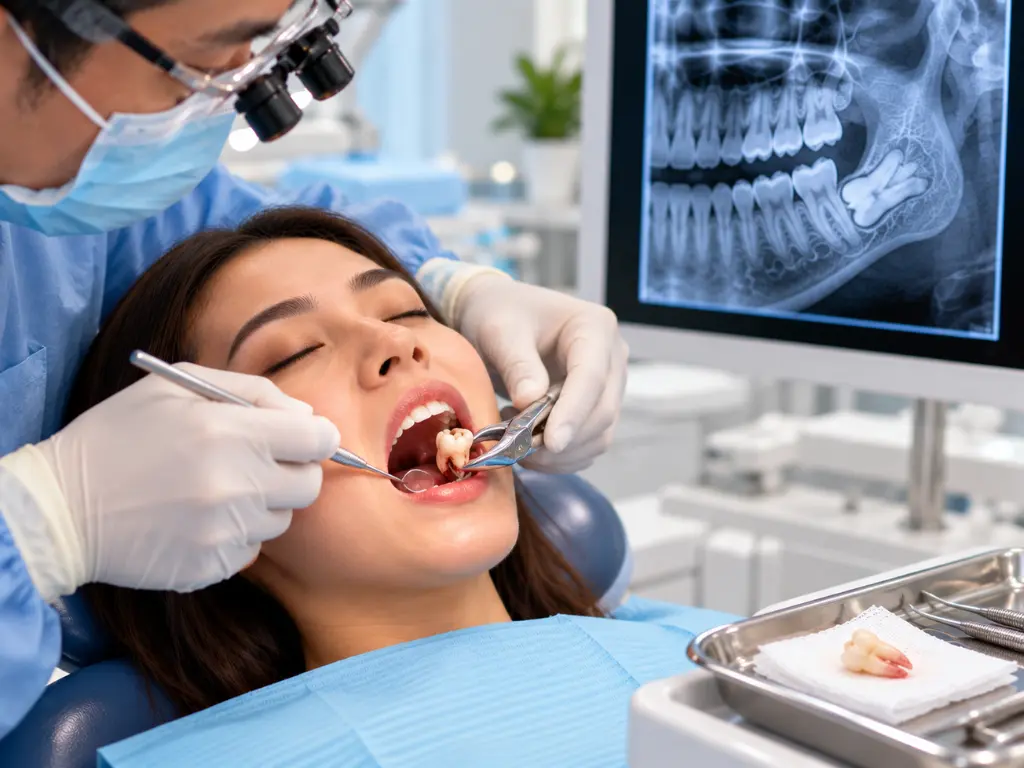
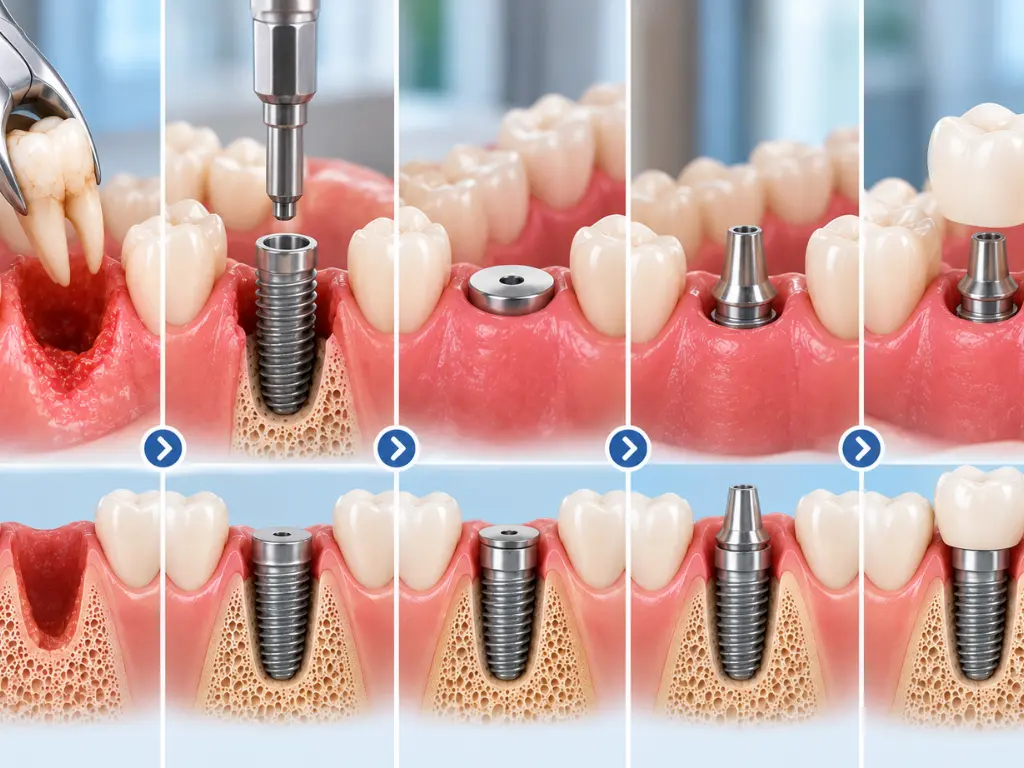
Whichever path you’re on, you’ll go through five steps: consultation and 3D scan, extraction, implant placement, bone healing, then the final crown. The paths differ in how long you wait between them.
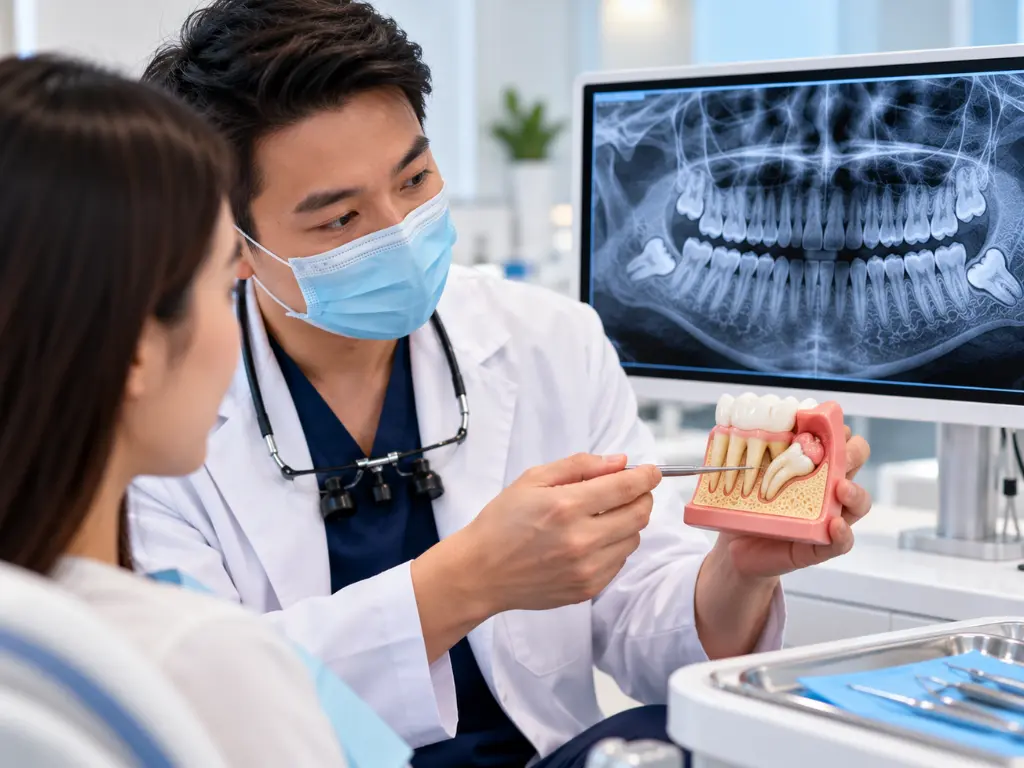
Your 3D scan shows the thickness of the facial wall, any infection and how much bone you have. So you’ll find out at the consultation whether you’re on a 3-month or a 10-month timeline.
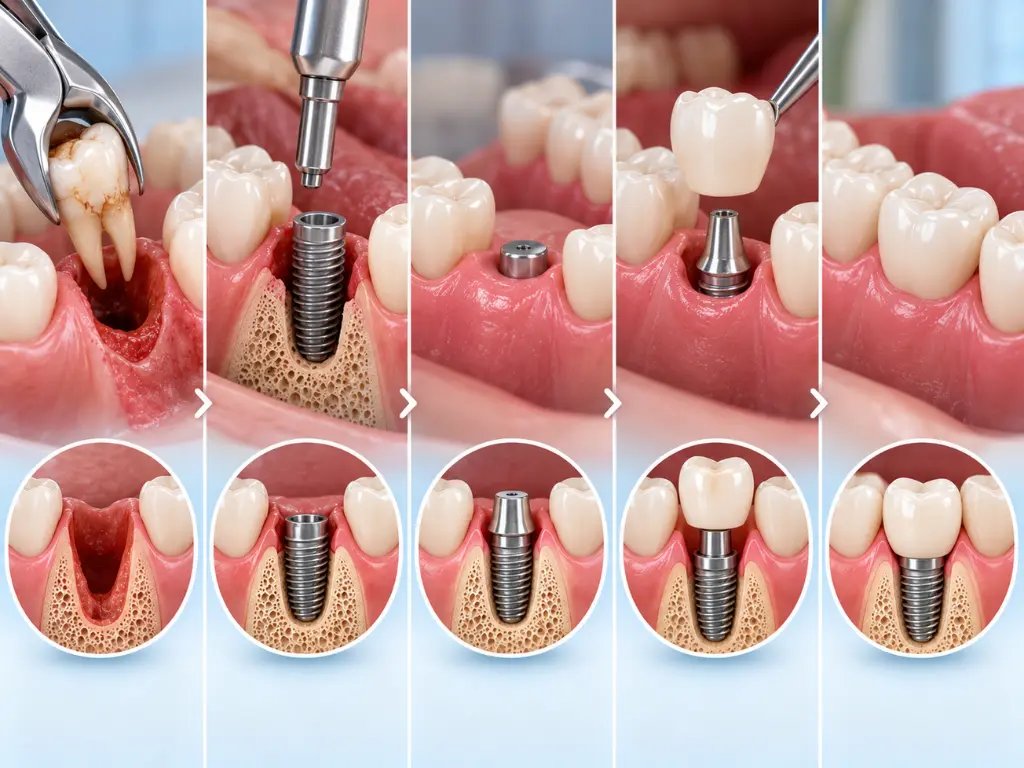
Depending on the socket, you can get an implant on the day of the extraction, after 4 to 8 weeks of gum healing, or after more than 6 months of full bone healing. The ITI accepts all three as valid protocols. Infection, thin facial bone or a damaged socket will push the timing later.
Waiting too long brings its own problems, because your jawbone starts shrinking as soon as the tooth comes out. In a 12-month study by Schropp and colleagues, the ridge at a single extraction site lost about 50% of its width, from 12 mm to 5.9 mm, and two-thirds of that loss happened in the first 3 months (summarised in the Journal of the Canadian Dental Association, 2006). Our article on how jawbone loss progresses explains the process.
Since most of the loss comes in those first 3 months, a patient who plans “to sort it out next year” often ends up needing a graft that an implant placed on time would have avoided. If your socket allows it, we place the implant at extraction or within the 4 to 8 week window. If it doesn’t, we graft at extraction so the socket can’t collapse.
An infected tooth is the main reason we don’t place an implant on the same day. At your implant consultation, we check that the site is free of infection before we offer same-day placement.
A bone graft adds about 4 to 6 months before your implant can go in, because the graft has to mature into bone strong enough to hold the implant. Socket preservation is the smallest kind of graft. Your dentist packs graft material into the socket at extraction, often under a membrane, to stop the ridge collapsing.
A 2018 systematic review by Bassir and colleagues in the International Journal of Oral & Maxillofacial Implants found that socket preservation saved an average of 1.86 mm of ridge width compared with letting the socket heal on its own. On a ridge that loses around 6 mm in a year, those 1.86 mm often decide whether a standard implant fits.
Healing time depends on the type of graft:
The first few days after a graft feel like an extraction. Our bone graft aftercare instructions cover soft foods for 2 to 4 days, no straws, and not chewing over the site until the sutures come out.
You’ll need about 5 visits on the immediate path, 6 to 7 on the early path and 7 to 8 on the delayed path with a graft. Each count follows the steps above, with a short check after each surgery.
Most of these visits are short, and only the surgery days take longer. If you choose oral or IV sedation, bring a driver to those visits. Plan on soft food for the first few days after each surgery. Our guide to eating after implant surgery has a list by day.
Dr. Javaheri places implants in our office and has more than 17 years of experience in general, cosmetic and implant dentistry. One patient review on our homepage describes a back molar implant he placed three months earlier, with a good bite and no problems since.
If your plan runs on the calendar year, you can have the implant placed before 31 December and the crown fitted after 1 January, and each stage goes against a different annual maximum. The ITI’s conventional loading window already puts more than 2 months between the two, so the split fits the clinical timeline.
Check your coverage before you plan around it, because most dental plans cover only part of implant treatment, if any. The 2026 Covered California Delta Dental PPO Family Dental plan, for example, files crowns as major services at 50% with a 6-month waiting period for adults. It doesn’t cover bone grafts placed with implants or ridge augmentation.
If your plan covers implants at 50%, the size of your maximum decides whether splitting helps. Say your implant costs the California in-network median of $1,829 and your crown $1,287, $3,116 in total, with a $50 deductible:
Splitting helps most when your maximum is low, when you need two or more implants, or when you’ve already used part of your 2026 maximum. National Association of Dental Plans data, cited in ADA News in December 2025, puts 32.8% of in-network maximums between $1,000 and $1,500.
You don’t have long left in 2026. On the immediate path, the implant goes in at the extraction visit, so any date before 31 December works. On the early path, you need the extraction by early November so the implant can go in 4 to 8 weeks later and still fall in 2026.
Some plans reset on a date other than 1 January, so check whether yours runs on a calendar year or a contract year.
If your socket walls are intact and the tissue is healthy, you can have the implant on extraction day and the crown about 3 months later. Thin bone or infection means a 4 to 8 week wait that protects your gumline. If the ridge has collapsed, grafting adds 4 to 6 months. Your 3D scan at the consultation shows which path you’re on, and if you start now, you can still use your 2026 benefits.
Find out which timeline fits your tooth. Book a free implant consultation with Dr. Javaheri at Smiles By Design Dentistry in Carmel Mountain Ranch, or call (858) 485-5552.
No. A temporary tooth fills the space during the 2 or more months of osseointegration that the ITI sets before the final crown. You can have a removable temporary or, if the implant is stable on day one, a fixed temporary crown fitted the same day.
With normal care, dental implants last for decades. A 2019 systematic review in the Journal of Dentistry by Howe, Keys and Richards found a pooled 10-year implant survival rate of 96.4% across 18 studies. The crown on top wears faster, and you’ll need to replace it more often than the implant itself.
Yes, but by then the bone has usually shrunk, and a graft adds 4 to 6 months or more. Schropp and colleagues found the ridge lost about 50% of its width within 12 months of extraction. A 3D CBCT scan shows whether you still have enough bone.
The whole process takes about 3 months on the immediate path, 4 to 7 months on the early path and 8 to 12 months if you need a bone graft first. The ITI’s 2018 consensus defines these placement windows, and each path includes more than 2 months of bone healing before the crown.