August 5, 2026
Your Child's First Dental Visit: What to Expect and How to Prepare Them


Your child’s first dental visit can play an important role in shaping how they feel about dental care in the years ahead. Starting early can help establish healthy habits, allow the dentist to monitor oral development, and create a positive first experience that may reduce the risk of future dental anxiety.
According to the American Academy of Pediatric Dentistry, a child’s first dental visit should be scheduled within six months of the eruption of the first primary tooth.
Many parents are unsure about what to expect during that first appointment. Knowing what may happen and preparing your child in advance can help make the experience more comfortable and manageable for both of you.
Many parents assume they should wait until all of their child’s baby teeth have erupted before scheduling a dental visit. However, early dental visits allow the dentist to identify potential concerns before they become more serious.
During the initial visit, the dentist may:
Early dental visits can also help children become familiar with the dental environment and feel more comfortable during future appointments.
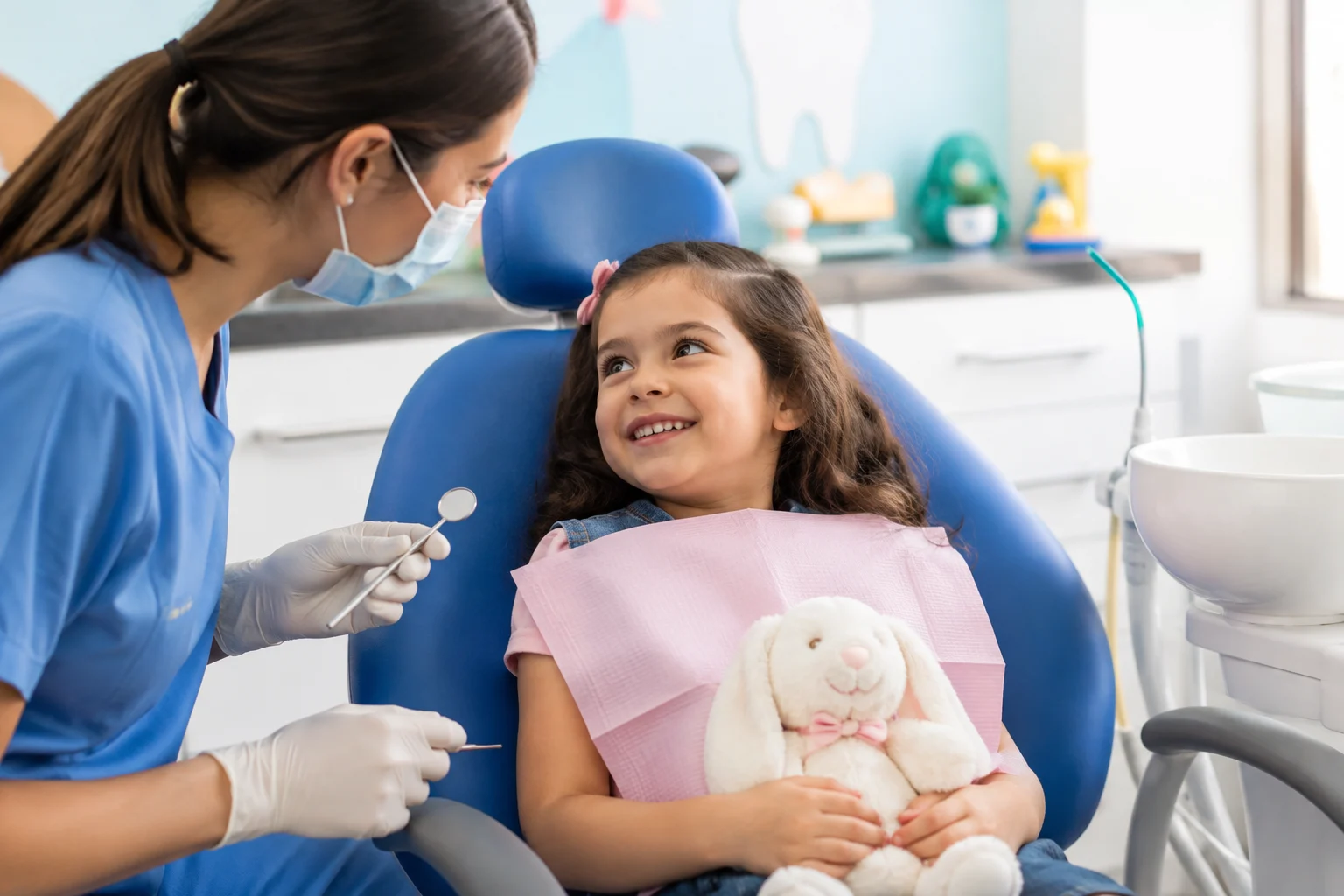
The first dental appointment is typically brief and focused on helping your child feel comfortable with the dental environment.
During the visit, the dentist may:
Depending on your child’s age and comfort level, the dentist may also gently clean the teeth.
The primary goal of the first visit is often to introduce your child to dental care in a positive and comfortable way while allowing the dentist to evaluate their oral health and development.
How you prepare your child before the appointment can influence how comfortable they feel about the experience.
Keep the explanation simple, positive, and age-appropriate. Tell your child that the dentist helps keep their teeth healthy and strong.
Avoid using potentially frightening words such as “pain,” “shot,” or “drill,” which may unnecessarily increase anxiety before the appointment.
Age-appropriate books and videos about dental visits can help children understand what to expect.
Becoming familiar with the dental environment, equipment, and routine can make the appointment feel less unfamiliar and intimidating.
Try to schedule the appointment at a time when your child is typically well-rested and comfortable.
If possible, avoid scheduling the visit during your child’s usual nap time or when they are likely to be tired or hungry.
Simple role-playing activities can help make the dental visit feel more familiar.
You can pretend to be the dentist, count your child’s teeth, or ask them to open their mouth for a practice checkup. These activities can help them become more comfortable with what may happen during the appointment.
Children often respond to their parents’ emotional cues.
Maintaining a calm, reassuring, and positive attitude can help your child feel more secure and confident about visiting the dentist.
A primary goal of the first dental appointment is to build trust and help your child feel comfortable receiving dental care.
Helpful tips include:
Some children become comfortable with the dental environment quickly, while others may need more time to adjust. Both responses can be normal, and allowing your child to become familiar with the experience at their own pace can help build confidence.
Your child’s first dental visit is about more than simply checking their teeth. It is an opportunity to build confidence, establish healthy oral care habits, monitor dental development, and create a positive foundation for future dental care.
With preparation, encouragement, and a supportive approach, the first dental visit can become a more comfortable and positive experience for both children and parents.
At Smiles By Design Dentistry of San Diego, we understand that a child’s first dental visit can feel unfamiliar or overwhelming. Our team creates a comfortable and welcoming environment designed to help children feel at ease and develop confidence in dental care.
Contact us today to schedule your child’s dental appointment.
The blog recommends scheduling the first visit within six months of the eruption of the first primary tooth.
Early visits allow the dentist to monitor oral development, check for signs of tooth decay, provide preventive guidance, and help the child become familiar with the dental environment.
The dentist may review medical history, examine the teeth and gums, evaluate oral development, discuss brushing and nutrition, and answer parents’ questions.
A gentle cleaning may be performed depending on the child’s age, oral health needs, and comfort level.
First visits are often relatively brief and focus on examination, education, and helping the child become comfortable.
Use simple, positive, age-appropriate language and explain that the dentist helps keep their teeth healthy and strong.
Avoid unnecessarily frightening terms such as “pain,” “shot,” or “drill,” which may increase anxiety.
Read age-appropriate dental books, practice a pretend dental visit at home, stay positive, and schedule the appointment when your child is well-rested.
Helpful items may include relevant health information and a favorite toy or comfort item to help your child feel more secure.
Some children adjust immediately, while others need more time. Both responses can be normal, and the dental team can help your child gradually become more comfortable.