August 17, 2026
Gingivitis vs. Periodontitis: How to Catch Gum Disease Before It Gets Serious


Bleeding gums while brushing might seem like nothing, but it's actually one of the earliest warning signs of gum disease. The two main stages are gingivitis and periodontitis, and knowing the difference matters more than most people realize. Gingivitis is mild and reversible.
Periodontitis is the advanced version, the kind that actually damages the bone and tissue holding your teeth in place. Left alone, what starts as mild inflammation can turn into gum recession, loose teeth, and even tooth loss down the road. Catching the symptoms early and getting real dental care is what stops gum disease before it becomes a long-term problem.
Gingivitis is the earliest stage of gum disease, caused by plaque and bacteria building up along the gumline. It shows up as red, swollen, tender gums that bleed easily when you brush or floss.
At this stage, the infection's only in the gum tissue, it hasn't touched the bone or connective tissue underneath yet. With a professional cleaning and consistent brushing and flossing, gingivitis is usually something you can actually reverse.
Periodontitis is what happens when gingivitis gets left untreated long enough. The bacterial infection spreads below the gumline and starts damaging the gums, ligaments, and jawbone that actually hold your teeth in place.
As it progresses, gums start pulling back, deep pockets form around the teeth, and bone loss can set in. Left untreated, periodontitis can eventually loosen teeth permanently or cause you to lose them, which is exactly why catching it early matters so much.
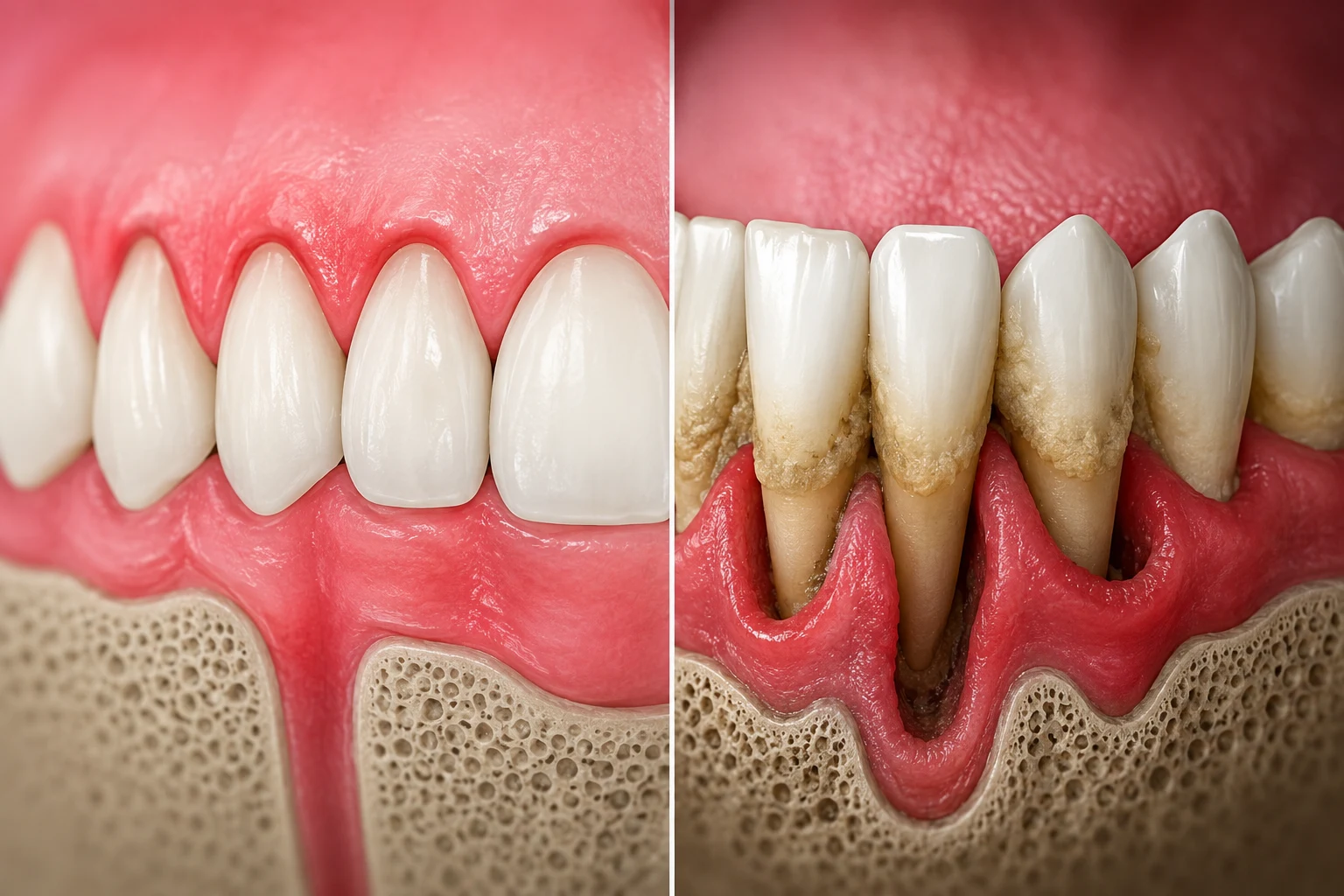
Gingivitis and periodontitis are part of the same disease process, but they're pretty different in how severe they are, what symptoms show up, and how much damage they actually do. Knowing the difference helps you recognize when early gum inflammation has crossed into something that needs real periodontal treatment.
Gingivitis is the first, mildest stage, affecting just the gum tissue. Periodontitis happens once the infection spreads deeper and starts damaging the structures that hold your teeth in place.
Gingivitis usually just means red, swollen, bleeding gums without much pain. Periodontitis can bring gum recession, bad breath that won't go away, deep gum pockets, loose teeth, pain while chewing, and even changes in how your bite feels.
Gingivitis causes inflammation but no permanent damage. Periodontitis actually destroys the connective tissue and jawbone supporting your teeth, which raises the risk of teeth becoming loose or eventually falling out.
With treatment early enough and good oral hygiene, gingivitis is usually reversible. Periodontitis can't undo the damage already done to bone and tissue, but professional treatment can still control it and stop it from getting worse.
Gingivitis usually just needs a professional cleaning and better brushing and flossing habits. Periodontitis often needs specialized treatment, scaling and root planing, ongoing maintenance, and in more advanced cases, additional procedures to actually preserve your oral health.
Gum disease tends to creep up slowly, which is exactly why early warning signs get missed so often. If symptoms stick around or get worse, that might mean gingivitis has already progressed into periodontitis. Recognizing these changes early and getting gum disease treatment San Diego residents actually trust can help prevent permanent damage to your gums and the bone underneath.
Gums that bleed regularly while brushing, flossing, or even eating shouldn't get ignored, that's usually a sign of ongoing inflammation.
Bad breath that sticks around no matter how much you brush might actually be bacteria building up below the gumline.
As gum disease advances, gums start pulling away from teeth, exposing more of the tooth and making it more sensitive.
Damage to the supporting bone can cause teeth to loosen, drift out of place, or change how your bite actually feels.
Discomfort while chewing, or teeth suddenly feeling more sensitive, can mean the infection's reached deeper into the supporting structures.
Related Blog:
Healthy gums are what keep your teeth strong and your oral health solid long-term. Knowing the difference between gingivitis and periodontitis and getting treatment before it progresses is what actually prevents permanent damage and tooth loss.
Smiles By Design Dentistry of San Diego offers thorough periodontal evaluations and treatment plans built to catch gum disease early and restore healthy gums.
From preventive care to advanced periodontal therapy, our team is genuinely committed to helping patients protect their smiles with care that's both compassionate and up-to-date.
Gingivitis is early-stage gum disease that affects only the gum tissue and is fully reversible with a professional cleaning and better oral hygiene. Periodontitis is advanced gum disease that damages the bone and connective tissue holding teeth in place, and that damage cannot be reversed.
Yes. If gingivitis is left untreated, the bacterial infection can spread below the gumline and start damaging the gums, ligaments, and jawbone, which is when it becomes periodontitis.
Yes, gingivitis is fully reversible. Because the infection is still limited to the gum tissue at this stage, a professional cleaning combined with consistent brushing and flossing can restore healthy gums.
No, periodontitis is not reversible. The bone and connective tissue damage it causes is permanent, though professional periodontal treatment can stop the disease from progressing and help preserve the teeth that remain.
The earliest signs of gum disease are red, swollen gums and bleeding while brushing or flossing. These symptoms point to gingivitis, the mildest and most treatable stage of gum disease.
Warning signs include gum recession, persistent bad breath, deep pockets forming around the teeth, loose or shifting teeth, pain while chewing, and noticeable changes in how the bite feels.
Yes. Periodontitis destroys the bone and ligament structures that anchor teeth in place, and without treatment it can eventually cause teeth to loosen or fall out permanently.
Gingivitis is typically treated with a professional dental cleaning followed by consistent daily brushing and flossing, which is usually enough on its own to reverse the inflammation.
Periodontitis treatment usually involves scaling and root planing, a deep cleaning performed below the gumline, along with ongoing periodontal maintenance visits and, in advanced cases, additional procedures to protect the remaining bone and teeth.
You should see a dentist if your gums bleed regularly during brushing, flossing, or eating, since this is one of the earliest and most common warning signs of gum disease. Catching it while it's still gingivitis makes it fully treatable.