


Yes, if your dental plan includes an orthodontic benefit. A PPO with orthodontic cover pays for Invisalign the same way it pays for braces, usually 50% of the fee until you reach a separate lifetime maximum. In the 2026 and 2027 plans we checked, that maximum ranged from $500 to $3,500. TRICARE’s August 2026 guidance, for example, caps it at $1,750.
We wrote this guide for San Diego patients and parents working out their share before an Invisalign consultation. Check your own plan before you start Invisalign treatment for teens and adults.
If your dental PPO has an orthodontic benefit, it covers Invisalign on the same terms as braces. Align Technology, the maker of Invisalign, states that “many dental insurance plans cover Invisalign treatment the same way they cover braces.” Your plan pays for the orthodontic treatment, whichever appliance you choose.
You need to check that your plan has that benefit in the first place. Some dental plans leave orthodontics out, and some limit it to children. Covered California’s 2026 standard dental designs list adult orthodontia as not covered, while children under 19 get medically necessary orthodontia at 50% coinsurance.
Even with the benefit, you’ll pay most of the bill yourself. Align cites OrthoFi data on 112,243 US patients in 2021, showing orthodontic coverage averaged $1,772. Invisalign at our practice costs $4,000 to $8,000 depending on the case, so that average benefit covers 27% to 39% of a moderate case priced at $4,500 to $6,500.
Braces cost about the same. Our guide on how aligners compare with braces puts metal braces at $3,000 to $7,000, so the insurer’s share is similar whichever you pick.
So ask your insurer how big your orthodontic lifetime maximum is, and whether it applies to the person having treatment.
Your benefit depends on the orthodontic lifetime maximum, the age limit and the waiting period. The lifetime maximum sits apart from your annual maximum, and once a person uses it up on a plan, that person can’t use it again on the same plan.
Five plans available to San Diego residents set those terms like this:
Plans pay the maximum in stages. Blue Shield’s 2027 plan caps the first payment, for initial placement, at 20% of the lifetime maximum, and pays follow-up visits “on a monthly basis during the scheduled course of the Orthodontic treatment.” TRICARE’s August 2026 guidance says you must stay enrolled for each month a payment is made. “Misaligned teeth can cause functional and developmental issues for patients,” said U.S. Navy Cmdr. Xiang Li of the TRICARE Dental Program in August 2026.
If you change jobs mid-treatment, the payments stop when your coverage does. Start treatment on a plan you expect to keep for the full course.
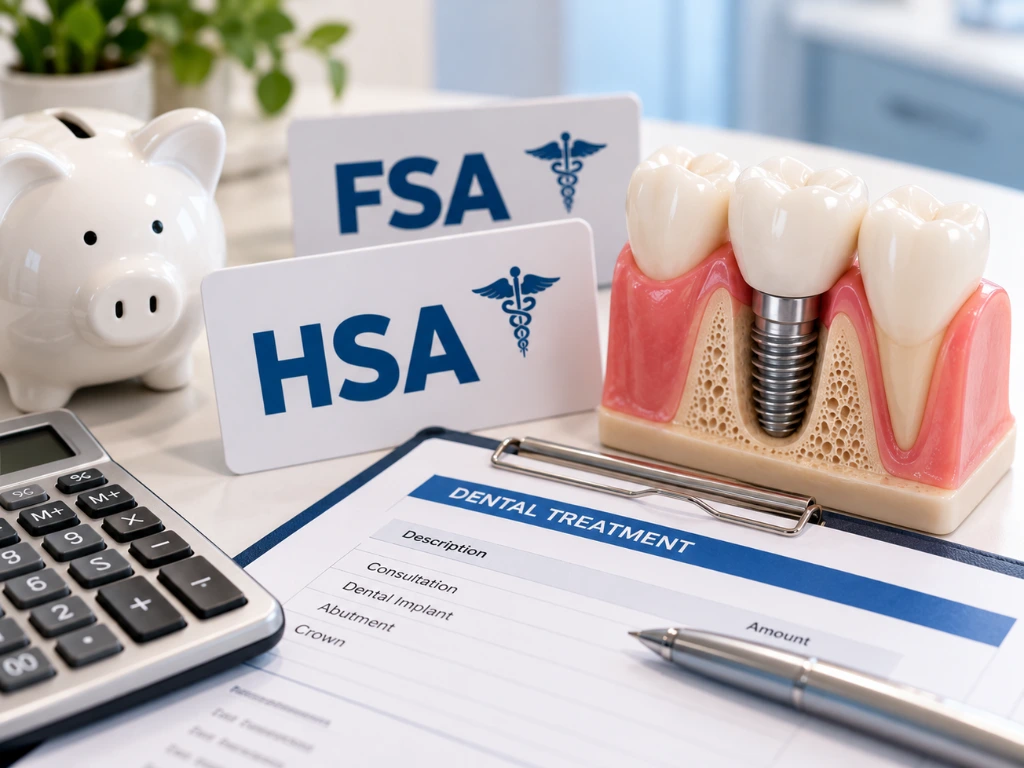
You can use HSA and FSA money for whatever insurance doesn’t cover. Invisalign is orthodontic treatment, and IRS Publication 502 lists braces among the dental treatments that count as medical expenses. The publication excludes teeth whitening and purely cosmetic surgery, but Invisalign to correct crowding or bite problems such as an overbite counts as dental treatment.
The 2026 limits are $3,400 for a health FSA, $4,400 for a self-only HSA and $8,750 for a family HSA. For 2027, Rev. Proc. 2026-24 raises the HSA limits to $4,500 and $9,000.
Pay attention to FSA timing. According to IRS Publication 969, a health FSA normally can’t pay in advance for care you haven’t received yet, but orthodontia can work differently.
Under the IRS proposed cafeteria plan regulations, an FSA plan can choose to reimburse orthodontia when you pay for it upfront, instead of visit by visit. “FSA plans can choose whether or not to allow prepayment for orthodontia reimbursement,” the International Foundation of Employee Benefit Plans explains. Ask your administrator which approach your plan uses.
With an HSA, timing isn’t a problem. It pays any qualified expense you incur after opening the account, and you can reimburse yourself later as long as you keep the receipts. If you live in San Diego, though, California doesn’t follow the federal HSA rules, so the state taxes your HSA contributions as income. The state’s Office of Tax Appeals confirmed this in 2023.
If your FSA allows orthodontia prepayment, pay the upfront fee in the plan year you elect for it and claim the full amount at once. If it doesn’t, we suggest the HSA, which gives you more room on a case that runs 12 to 18 months.
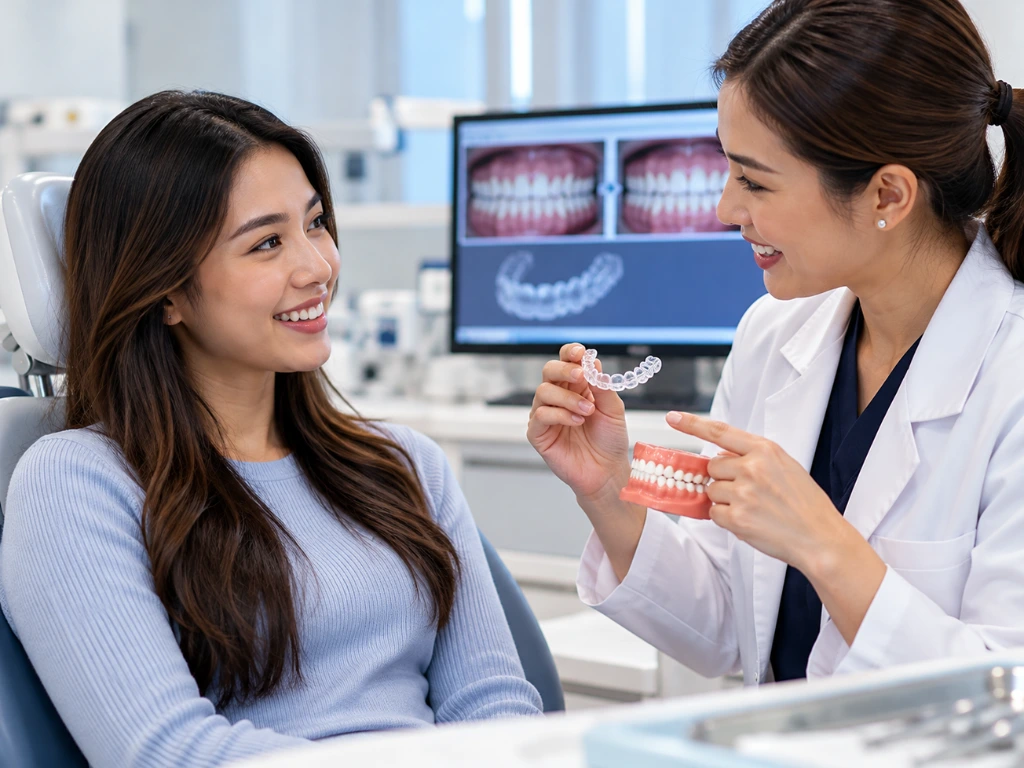
On a $5,500 Invisalign case, a plan paying 50% up to a $1,500 lifetime maximum leaves you $4,000 to pay, and a 2026 FSA election of $3,400 covers most of that. The $5,500 fee sits inside our moderate-case range of $4,500 to $6,500, from our guide to Invisalign cost ranges.
Take the Blue Shield 2027 plan above. After the $50 orthodontic deductible, 50% of $5,450 comes to $2,725. That’s over the $1,500 lifetime maximum, so the plan pays $1,500. The first payment is capped at $300 (20% of $1,500), and the remaining $1,200 comes in monthly, or $100 a month over a 12-month treatment.
On the other plans, the same $5,500 case works out like this, assuming the plan allowance matches the fee:
On the Blue Shield plan, a $3,400 FSA election covers $3,400 of your $4,000 share, leaving $600 for an HSA or a monthly payment plan. In the 22% federal bracket, paying that $3,400 pre-tax saves you $748 in federal income tax.
Before your consultation, call your insurer or log in to your member portal and ask these seven questions. Then ask the dental office to request a pretreatment estimate, which tells you what “50% coverage” means in dollars.
Questions for your insurer:
Get the answers in writing. “Ask your dentist for a pretreatment estimate before you start,” TRICARE advises, because the estimate shows what the plan covers, how much it pays and when. Our office sends the treatment plan from your 3D scan to the insurer.
If both parents have dental plans with orthodontic benefits, list both. Align’s published patient example shows two parents’ plans paying $5,600 of a $7,000 case, though it notes that dual coverage “doesn’t always double your coverage dollar-per-dollar.”
Bring your insurance card to the consultation. Smiles By Design accepts most insurance plans, and we’ll go through the financing options for your share at the same visit.
If you’re planning Invisalign for next year, use open enrolment to pick a plan with an orthodontic benefit that covers the patient’s age. Look for no waiting period, or a short one, and the highest lifetime maximum you can get. Plan changes take effect on 1 January.
The 2026 windows for 2027 coverage are:
Run the waiting-period maths before you switch. If you join a plan with a 12-month orthodontic waiting period on 1 January 2027, it pays nothing towards orthodontics until January 2028. Add a year of premiums to the cost, then compare that with the benefit.
For a family, set the dental plan and the FSA election together. Choose the dental plan with the best orthodontic terms for the person having treatment. Then set your FSA election close to the out-of-pocket figure on the pretreatment estimate, so you neither run short nor lose money at the deadline. The IRS publishes the 2027 health FSA limit each autumn, and for 2026 it is $3,400.
A plan with an orthodontic benefit pays for aligners the way it pays for braces. In the plans we checked, that help tops out between $500 and $3,500 per person, paid in instalments that stop if your coverage ends. You pay the rest, and pre-tax money from an FSA or HSA is the cheapest way to cover it. Get the pretreatment estimate first, then set your FSA or HSA contributions to match the figure on it.
Know your numbers before you start. Book a free Invisalign consultation at Smiles By Design Dentistry in Carmel Mountain Ranch, or call (858) 485-5552.
Some plans do and many don’t. GEHA’s 2026 FEDVIP High Option covers adults with a $3,500 lifetime maximum, and Blue Shield of California’s 2027 Enhanced Dental PPO covers adults up to $1,500 after a 12-month wait. Covered California’s standard plans exclude adult orthodontia altogether.
Yes. IRS Publication 502 lists braces as dental treatment, and orthodontic aligners do the same job. The 2026 limits are $4,400 self-only and $8,750 family, rising to $4,500 and $9,000 in 2027. Keep the itemised receipts, and remember that California taxes HSA contributions.
On the plans we checked, Invisalign counts against a separate orthodontic lifetime maximum instead. GEHA’s 2026 High Option states that orthodontics doesn’t count towards the annual maximum, and Blue Shield’s 2027 plan pairs a $2,000 calendar-year maximum with a separate $1,500 orthodontic lifetime maximum.
Your old plan stops paying when that coverage ends, because plans pay in instalments over the course of treatment. TRICARE’s August 2026 guidance requires you to be enrolled for every month it makes a payment. A new plan applies its own maximum and rules, so ask the new insurer how it handles treatment already under way.