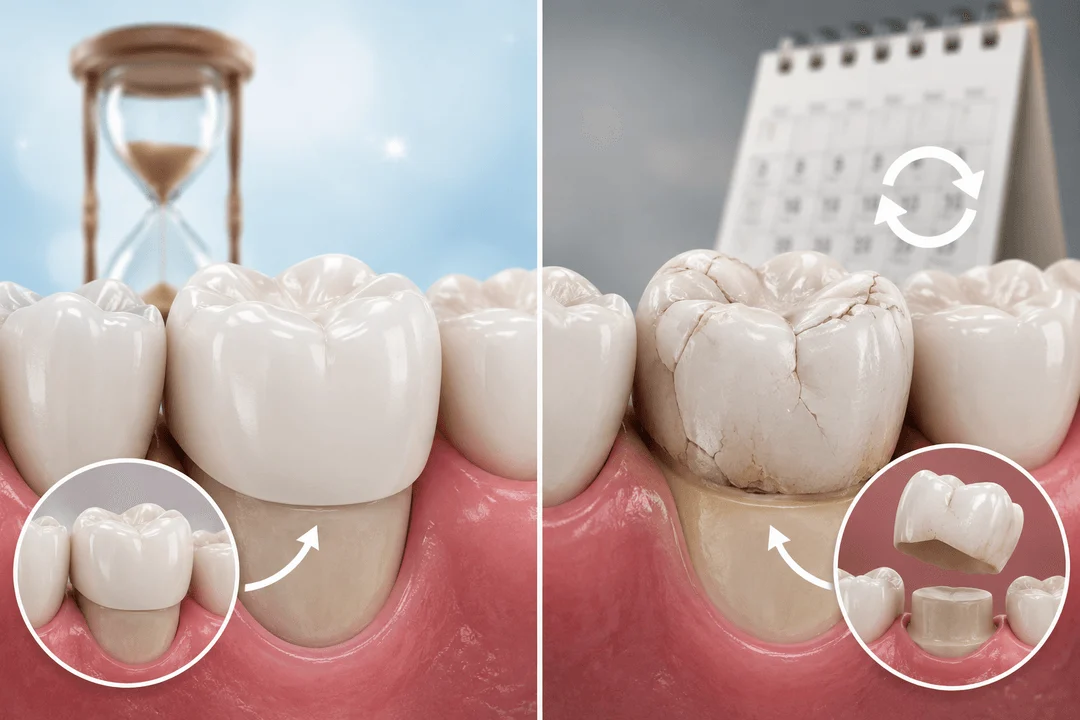


Dental crowns are a common restorative treatment used to protect teeth that are damaged, weakened, or have undergone extensive dental treatment. They can restore function, improve the appearance of the smile, and help preserve a natural tooth for many years.
Although dental crowns are designed to be durable, they do not last indefinitely. The lifespan of a crown depends on several factors, including the material used, oral hygiene habits, bite forces, daily habits, and overall dental health.
Understanding how long dental crowns typically last and recognizing the signs that one may need replacement can help you maintain good oral health and proper dental function.
Many dental crowns last approximately 10 to 15 years, although some may last considerably longer with proper care. In certain cases, crowns may remain functional for 20 years or more.
The lifespan of a dental crown can depend on factors such as:
Porcelain, ceramic, zirconia, metal, and porcelain-fused-to-metal crowns can vary in durability, appearance, and clinical performance. The material selected can therefore play an important role in how long the restoration lasts.
Dental crowns are designed to withstand everyday chewing forces, but several factors may shorten their lifespan.
A dental crown itself cannot develop decay, but the natural tooth underneath it and the area around the crown margin can still be affected by cavities.
If oral hygiene is inadequate, decay may develop where the crown meets the natural tooth and compromise the restoration. Daily brushing, flossing, and regular dental checkups can help protect the supporting tooth and extend the lifespan of the crown.
Teeth grinding and clenching can place additional pressure on both dental crowns and natural teeth. Over time, these repeated forces may contribute to excessive wear, cracks, fractures, or other damage to the restoration.
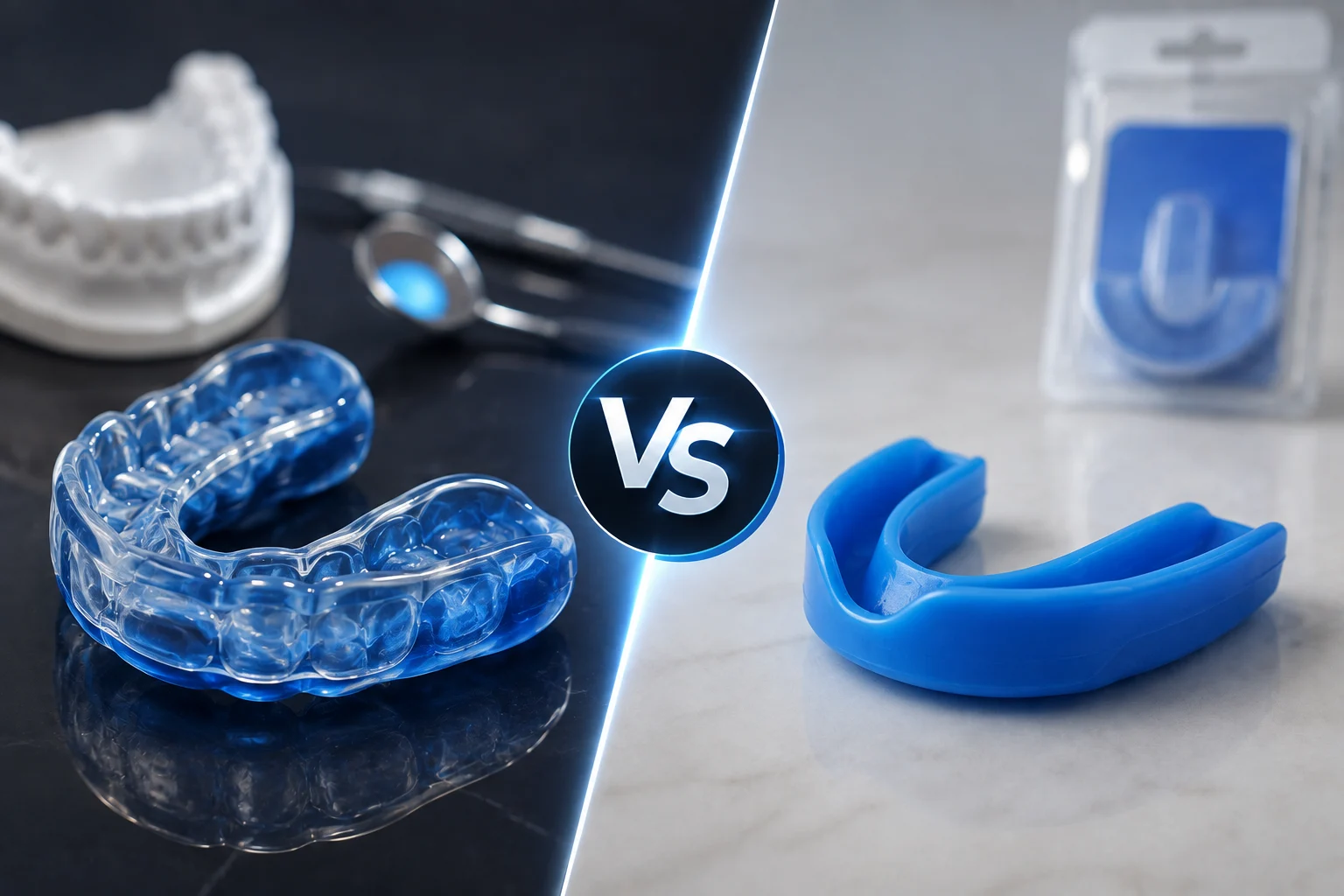
Patients who grind or clench their teeth may benefit from discussing a custom night guard with their dentist. A night guard can help protect both natural teeth and dental restorations during sleep.
Chewing on ice, pens, hard candy, or other non-food objects can increase the risk of chipping or cracking a dental crown.
Even strong crown materials may experience additional wear or damage when repeatedly exposed to excessive biting forces. Avoiding these habits can help protect the restoration.
Crown materials differ in strength, durability, appearance, and suitability for different areas of the mouth.
Some materials are selected because they provide greater resistance to chewing forces, while others may be chosen for their natural-looking appearance. Your dentist can recommend a crown material based on the location of the tooth, your bite, oral health, and functional and aesthetic treatment goals.
Dental crowns should be monitored during routine dental examinations. Certain changes may indicate that a crown needs adjustment, repair, or replacement.
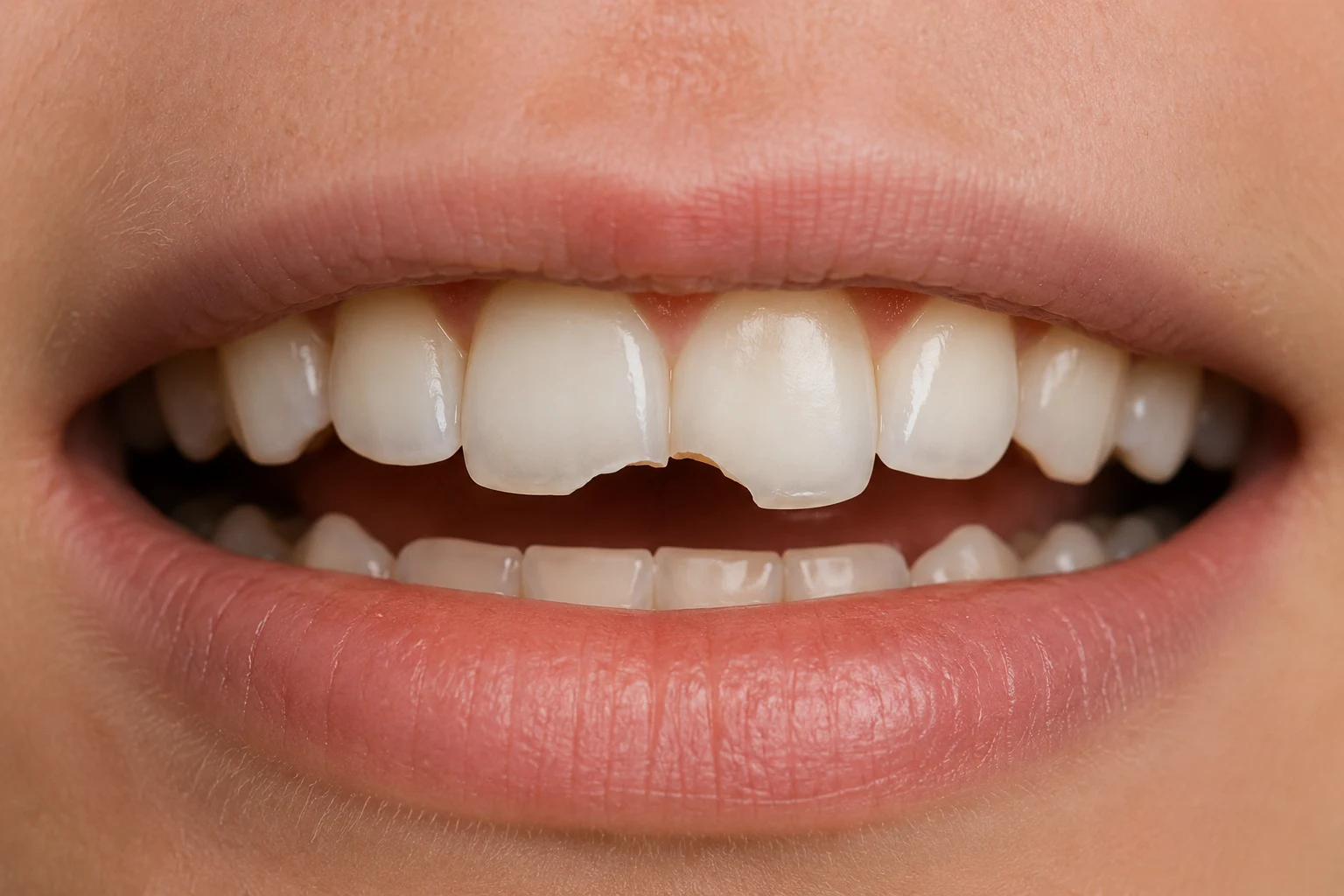
Cracks, chips, fractures, or visible wear can affect both the appearance of a crown and its ability to protect the underlying tooth.
A damaged crown may no longer provide adequate coverage or structural protection and should be evaluated by a dentist.
New sensitivity to hot or cold temperatures, pressure, or biting may indicate a problem involving the crown, the tooth underneath it, or the surrounding tissues.
Persistent or worsening sensitivity should be evaluated by a dentist rather than ignored.
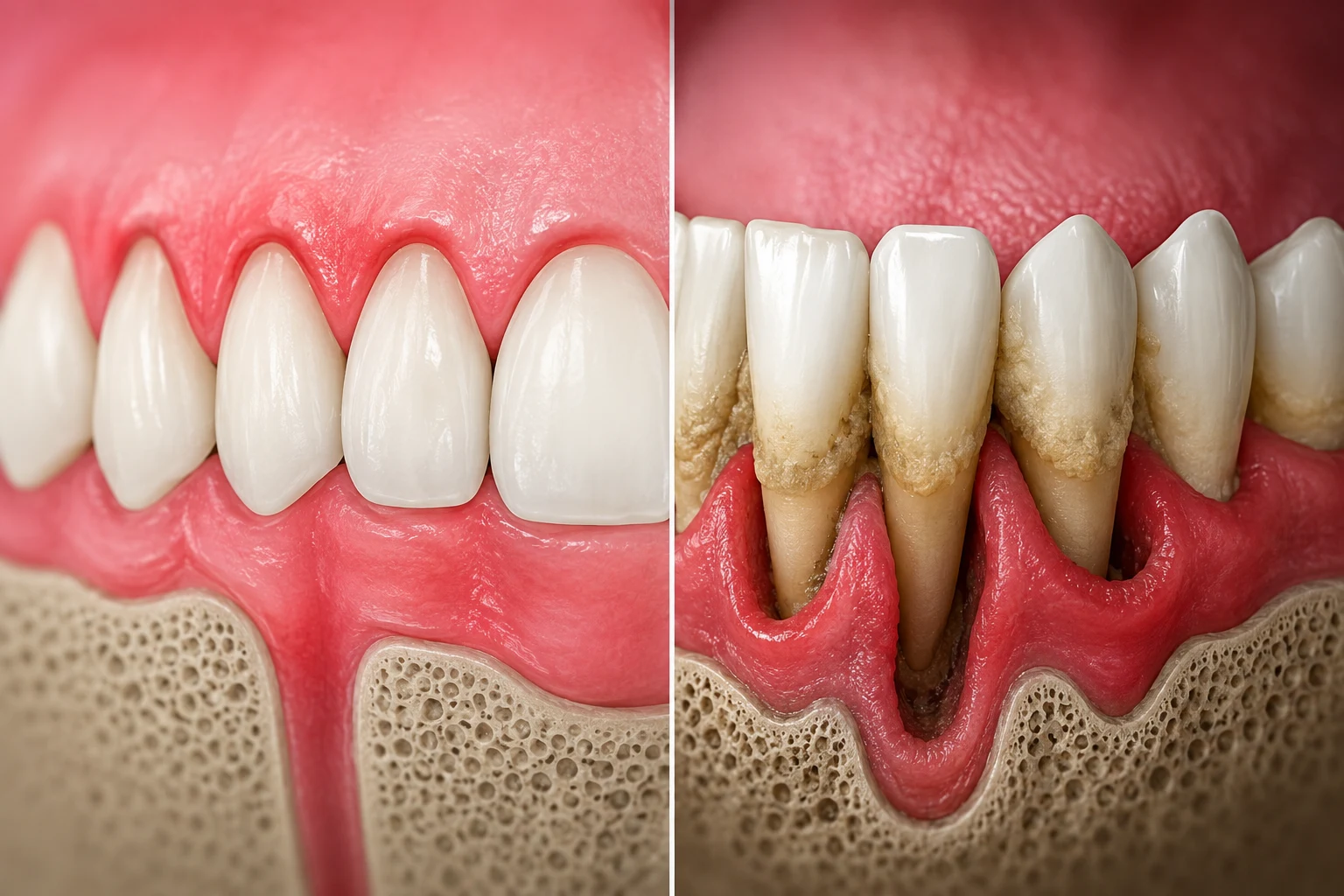
Changes in the gum line can gradually expose the edge or margin of a dental crown.
In addition to affecting the appearance of the restoration, an exposed crown margin may create an area where plaque and bacteria can accumulate more easily. Regular dental examinations can help monitor these changes.
A properly fitted crown should feel secure when biting and chewing.
If a crown feels loose, shifts during chewing, or repeatedly becomes dislodged, it should be evaluated promptly. A loose crown may allow bacteria or food particles to reach the underlying tooth and can reduce the effectiveness of the restoration.
Although a crown itself cannot develop tooth decay, cavities may form in the natural tooth near the crown margin.
Decay around or beneath a crown can compromise the supporting tooth and is a common reason a dental crown may eventually require replacement.
Dental crowns are a durable, long-term restorative option for damaged or weakened teeth, but they still require consistent oral hygiene and regular professional care.
Understanding the factors that affect crown longevity and recognizing early signs of wear, loosening, sensitivity, or decay can help protect the underlying tooth and reduce the risk of more extensive restorative problems.
Whether you need an existing crown evaluated or are considering restorative treatment for the first time, Smiles By Design Dentistry provides personalized dental care based on your individual oral health needs.
Regular dental examinations can help monitor existing crowns, identify potential concerns early, and support a healthy, functional, and confident smile for years to come.
Many dental crowns last approximately 10 to 15 years. Some may remain functional for 20 years or longer with proper care.
Crown longevity can depend on the material, oral hygiene, teeth grinding, diet, bite forces, crown location, and overall dental health.
The crown itself cannot develop tooth decay, but the natural tooth near or underneath the crown can still develop cavities.
Signs may include cracks, chips, looseness, new sensitivity, discomfort when chewing, gum recession, or decay around the crown margin.
A loose crown should be evaluated promptly. It may expose the underlying tooth to bacteria, food particles, sensitivity, or further damage.
Yes. Grinding and clenching can place additional pressure on crowns and may contribute to wear, cracks, or fractures.
Different materials vary in strength, appearance, and suitability. Your dentist can recommend a material based on the tooth’s location, your bite, and your treatment goals.
Yes. Gum recession may expose the crown margin and can affect both appearance and plaque accumulation around the restoration.
Brush and floss consistently, attend regular dental checkups, avoid chewing hard objects, and address teeth grinding or clenching when necessary.
Not necessarily. Age alone does not determine whether a crown needs replacement. Your dentist can evaluate its condition, fit, surrounding tooth structure, and function.