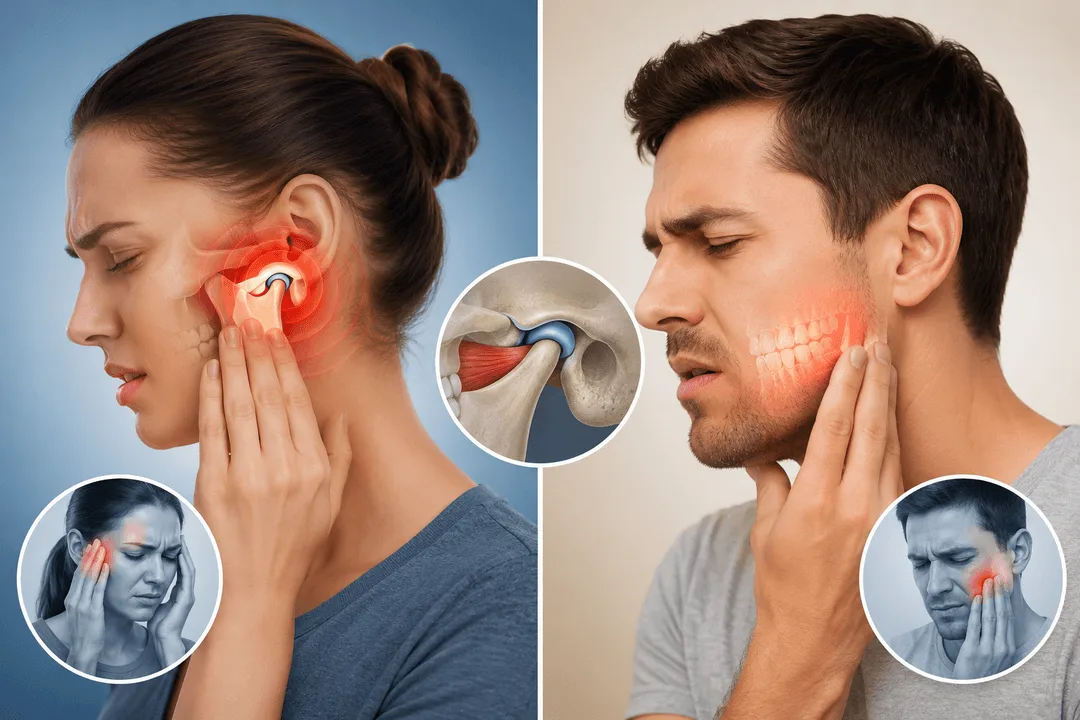


Jaw pain can make everyday activities such as eating, speaking, yawning, and even smiling uncomfortable. In some cases, the discomfort may result from temporary muscle strain or a minor dental issue and improve on its own. However, persistent or recurring jaw pain may be associated with a temporomandibular disorder (TMD).
The challenge is that TMD symptoms can overlap with other causes of jaw pain, making it difficult to know when discomfort is temporary and when it requires professional evaluation.
Understanding the difference between TMD-related symptoms and other types of jaw pain can help you recognize when it may be time to consult a dentist.
The temporomandibular joints (TMJs) connect the lower jaw to the skull on both sides of the face. These joints work with the surrounding muscles and tissues to help you open and close your mouth, chew, speak, and move your jaw from side to side.
Temporomandibular disorders (TMDs), often referred to as TMJ disorders, are a group of conditions that can cause pain or dysfunction in the jaw joints and the muscles responsible for jaw movement.
The exact cause of TMD is not always clear. In some cases, symptoms may be associated with jaw injuries, arthritis, teeth clenching or grinding, muscle tension, or a combination of contributing factors.
Jaw pain does not always mean that you have a temporomandibular disorder. Discomfort can develop for several reasons, and some causes may be temporary.
Common causes of jaw pain include:
In many cases, the discomfort improves once the underlying cause is identified and treated.
Although both can cause discomfort around the jaw, certain symptoms are more commonly associated with temporomandibular disorders.
TMD can cause symptoms involving the jaw joint as well as the surrounding facial and chewing muscles.
Possible signs include:
Jaw clicking or popping without pain is relatively common and does not necessarily indicate a temporomandibular disorder. However, joint sounds accompanied by pain, restricted movement, or other symptoms should be professionally evaluated.
The appropriate next step depends on the cause, severity, and duration of your symptoms. Mild jaw discomfort may improve with simple measures that reduce stress on the jaw.
These may include:
You should consider consulting a dentist or healthcare professional if:
A professional evaluation is also important when jaw pain is severe, follows an injury, or occurs with other concerning symptoms.
There is no single standard test used to diagnose every temporomandibular disorder. A dentist or healthcare professional will typically review your symptoms and medical history and examine your jaw movement, facial and jaw tenderness, and joint function.
In some situations, imaging such as dental X-rays, CT scans, or MRI scans may be recommended to evaluate the jaw joint or surrounding structures more closely.
Treatment depends on your symptoms and the specific condition involved. Conservative treatment is generally considered first and may include:
Because many TMD symptoms can improve with conservative care, irreversible treatments that permanently change the teeth, bite, or jaw should generally not be the first approach.
Occasional jaw pain may result from muscle strain, dental problems, or other temporary causes. However, persistent pain accompanied by painful clicking, jaw stiffness, limited movement, locking, frequent headaches, or difficulty chewing may indicate a temporomandibular disorder and should be professionally evaluated.
Identifying the cause of jaw pain early can help determine the appropriate treatment and prevent symptoms from continuing to interfere with everyday activities.
If jaw pain is affecting your daily life, the team at Smiles By Design Dentistry of San Diego can evaluate your symptoms, identify potential TMD-related concerns, and recommend an appropriate treatment plan designed to improve comfort and support healthy jaw function.
TMJ pain tends to center around the joint near the ears and temples and often comes with clicking or restricted movement, while ordinary strain-related jaw pain is usually temporary and resolves once the overuse or underlying cause settles down.
Yes — sinus pressure is one of several non-TMJ causes of jaw discomfort, alongside things like dental infections, gum disease, and recent dental procedures, all of which typically improve once the underlying issue is treated.
Not usually. Ear pain, pressure, or a feeling of fullness without an actual ear infection is a symptom more closely associated with TMJ disorder than with ordinary, temporary jaw pain.
If discomfort persists for several weeks, involves restricted jaw movement, or comes with frequent headaches or clicking accompanied by pain, that's a reasonable point to have it evaluated rather than waiting it out.
Yes — dental infections and abscesses are a common non-TMJ source of jaw discomfort, and this type of pain generally resolves once the underlying dental problem is treated, unlike the more chronic, joint-centered nature of TMJ.
Eating softer foods, avoiding excessive chewing, applying warm compresses, and managing stress can ease mild, short-term jaw discomfort, though symptoms that don't improve are worth having checked professionally.
Locking, whether in an open or closed position, is a classic TMJ symptom and generally isn't something ordinary muscle strain or temporary jaw pain causes, making it a fairly reliable signal to seek evaluation.
A dentist typically checks how the jaw functions, evaluates the bite, and reviews symptoms and medical history to determine whether TMJ disorder, rather than another cause, is behind the pain.
Yes — having a procedure done, especially one involving the jaw being open for an extended period, can leave temporary soreness that resolves on its own and isn't related to TMJ disorder.
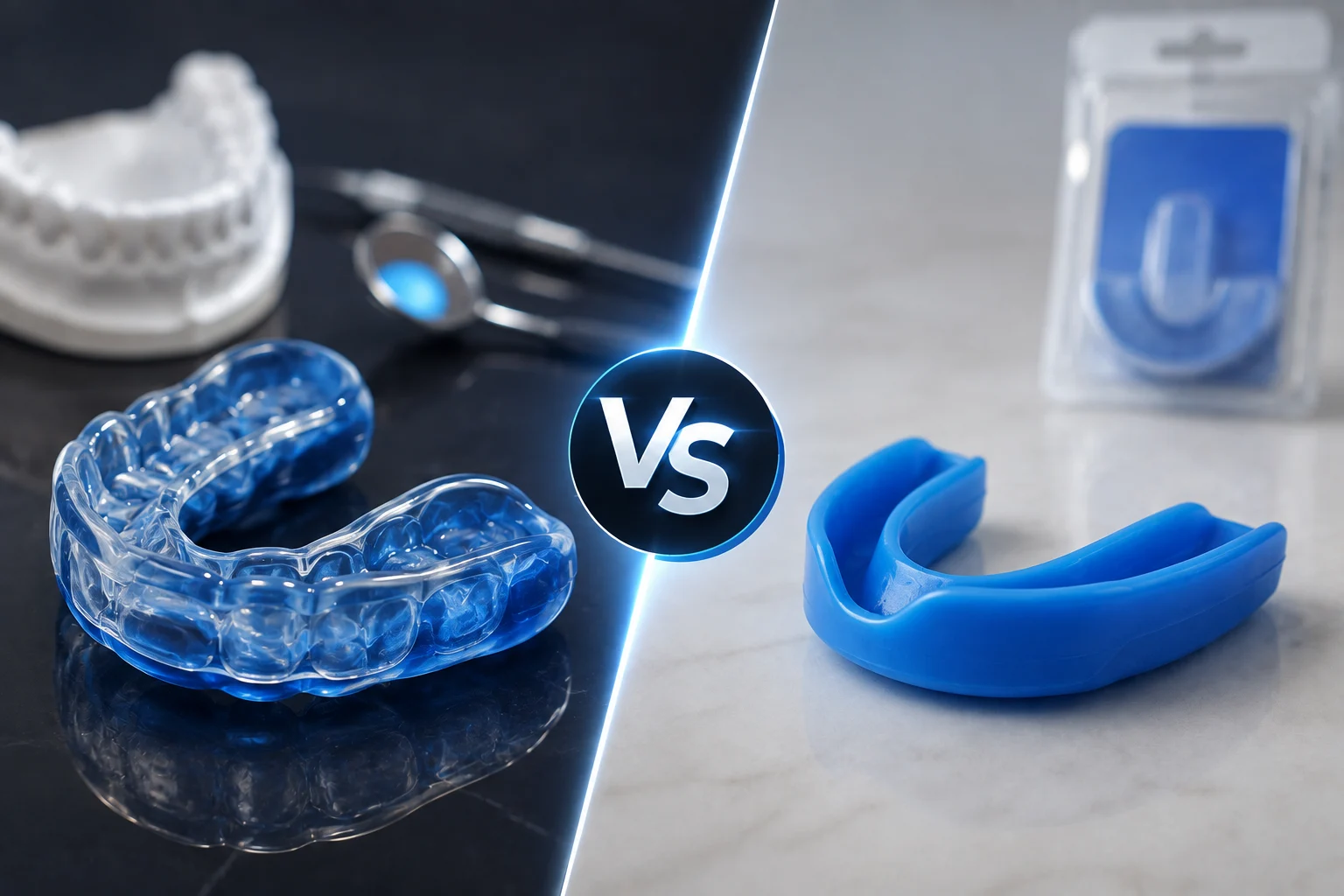
Depending on the cause, treatment may include custom oral appliances or night guards, bite evaluation, physical therapy exercises, stress management strategies, and lifestyle changes aimed at reducing strain on the joint.