

A cavity may not cause pain, especially in its early stages, which can make it easy to assume that treatment can wait. Many people delay dental care because the cavity does not seem serious yet. However, cavities do not heal on their own.
Once tooth decay develops, it may continue to progress without treatment. What begins as a small area of decay can eventually lead to greater tooth damage, sensitivity, pain, infection, and the need for more extensive dental treatment.
Understanding what can happen when a cavity is left untreated can help you make informed decisions about your oral health before the condition becomes more serious.
A cavity is an area of permanent damage to the hard outer structure of a tooth caused by tooth decay. It develops when bacteria in the mouth produce acids that gradually break down tooth enamel.
Several factors may contribute to cavities, including:
When detected early, a cavity may often be treated with a dental filling. If treatment is delayed, the decay may continue to progress into deeper layers of the tooth.
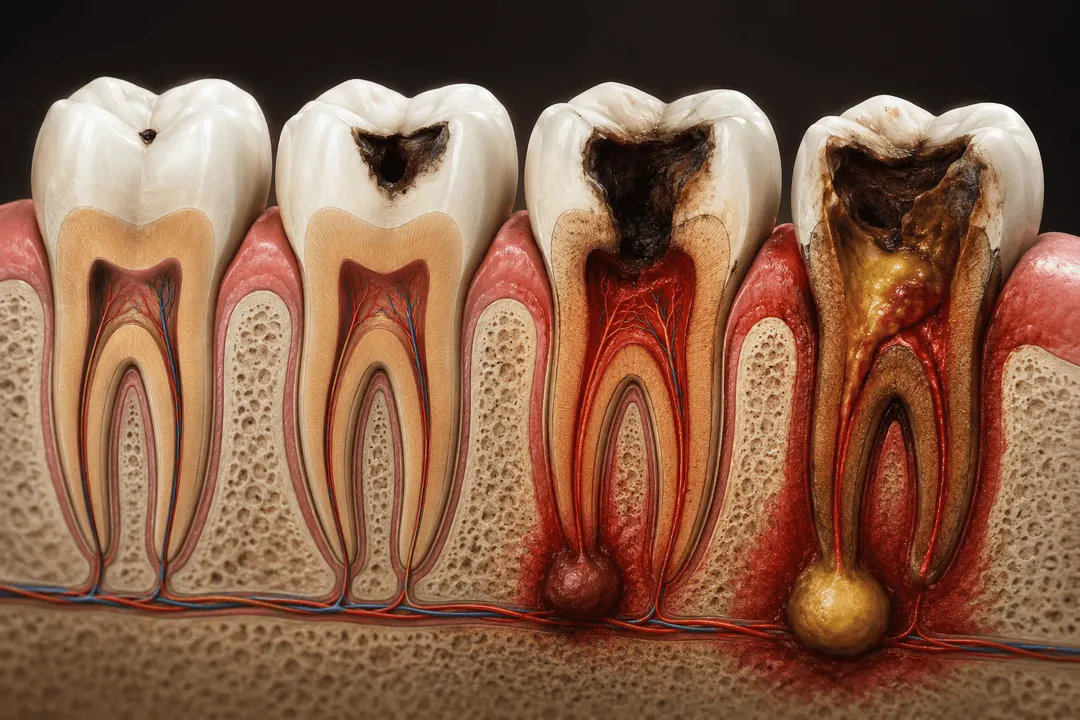
Tooth decay can progress through different stages. The longer treatment is delayed, the greater the risk of additional damage and complications.
A cavity may continue to increase in size when left untreated. Bacteria can gradually damage more of the tooth structure, causing a small area of decay to become more extensive over time.
A cavity that may initially require a simple filling can eventually require more involved restorative treatment if the decay progresses.
As decay reaches deeper layers of the tooth, sensitivity may begin to develop. You may notice discomfort when consuming hot, cold, sweet, or acidic foods and beverages.
If decay continues to progress, sensitivity may become more persistent and can eventually interfere with eating, drinking, or other daily activities.
If decay reaches the dental pulp, where the tooth's nerves and blood vessels are located, inflammation or infection may develop.
This can result in significant pain, swelling, or a dental abscess. A suspected dental infection should be evaluated promptly because delaying treatment may allow the condition to become more serious.
As tooth decay becomes more advanced, a standard filling may no longer be sufficient.
Depending on how far the decay has progressed, treatment may involve:
Some patients delay dental treatment because they are concerned about the immediate cost. However, postponing care may lead to the need for more extensive and potentially more expensive treatment later.
Treatment needs may increase as decay progresses:
Treating a cavity early is often less extensive and may help preserve more of the natural tooth.
Preventive dental care and early treatment can help reduce the risk of tooth decay becoming more advanced.
Helpful preventive habits include:
Related Blog Posts:
A cavity may seem minor at first, particularly if it is not causing pain. However, untreated tooth decay can become more serious over time and may eventually lead to sensitivity, pain, infection, or the need for more extensive dental treatment.
Addressing a cavity early may help reduce the amount of treatment required and preserve more of the natural tooth.
At Smiles By Design Dentistry of San Diego, patients receive comprehensive dental care focused on identifying oral health concerns early and preserving natural teeth whenever possible.
Our dental team works closely with patients to develop personalized treatment plans and address cavities before they progress into more complex dental problems.
Once a cavity has created permanent damage to the tooth structure, it generally requires professional dental treatment.
Untreated decay may continue to progress into deeper tooth structures, potentially causing sensitivity, pain, infection, or more extensive tooth damage.
If tooth decay progresses deeply enough to affect the dental pulp, root canal treatment may eventually be required.
No. Cavities may not cause noticeable symptoms during their early stages, which is why routine dental examinations are important.
Possible signs include increasing sensitivity, tooth pain, discomfort when chewing, visible damage, or swelling.
Yes. If bacteria reach the dental pulp and infection develops, a dental abscess may form.
Severe untreated decay can damage enough tooth structure that preserving the tooth becomes more difficult, and extraction may sometimes be necessary.
Early treatment is often less extensive. A small cavity may require a filling, while advanced decay may require a crown, root canal, or extraction.
Brush twice daily with fluoride toothpaste, floss daily, limit sugary foods and drinks, attend regular dental checkups, and address detected decay promptly.
Your dentist can recommend an appropriate examination schedule based on your oral health and cavity risk.