

Tooth damage does not always require the same type of dental treatment. Some teeth can be repaired with a simple filling, while others may need a dental crown for long-term protection and structural support. Many patients are confused when dentists recommend crowns instead of fillings, especially when the problem seems minor or causes little to no pain at first.
Delaying appropriate dental care can allow decay, cracks, or weakened areas to worsen over time. Small cavities may become larger, and weakened teeth may fracture during normal chewing. Severe decay may eventually require more extensive treatment, such as root canal therapy, or may increase the risk of tooth loss.
Fillings and crowns are both effective options for restoring damaged teeth, but they serve different purposes. The appropriate choice depends on factors such as the amount of healthy tooth structure remaining, the severity of the damage, chewing forces, and the need for long-term strength.
Understanding how dentists choose between crowns and fillings can help patients make informed treatment decisions and protect their oral health over time.
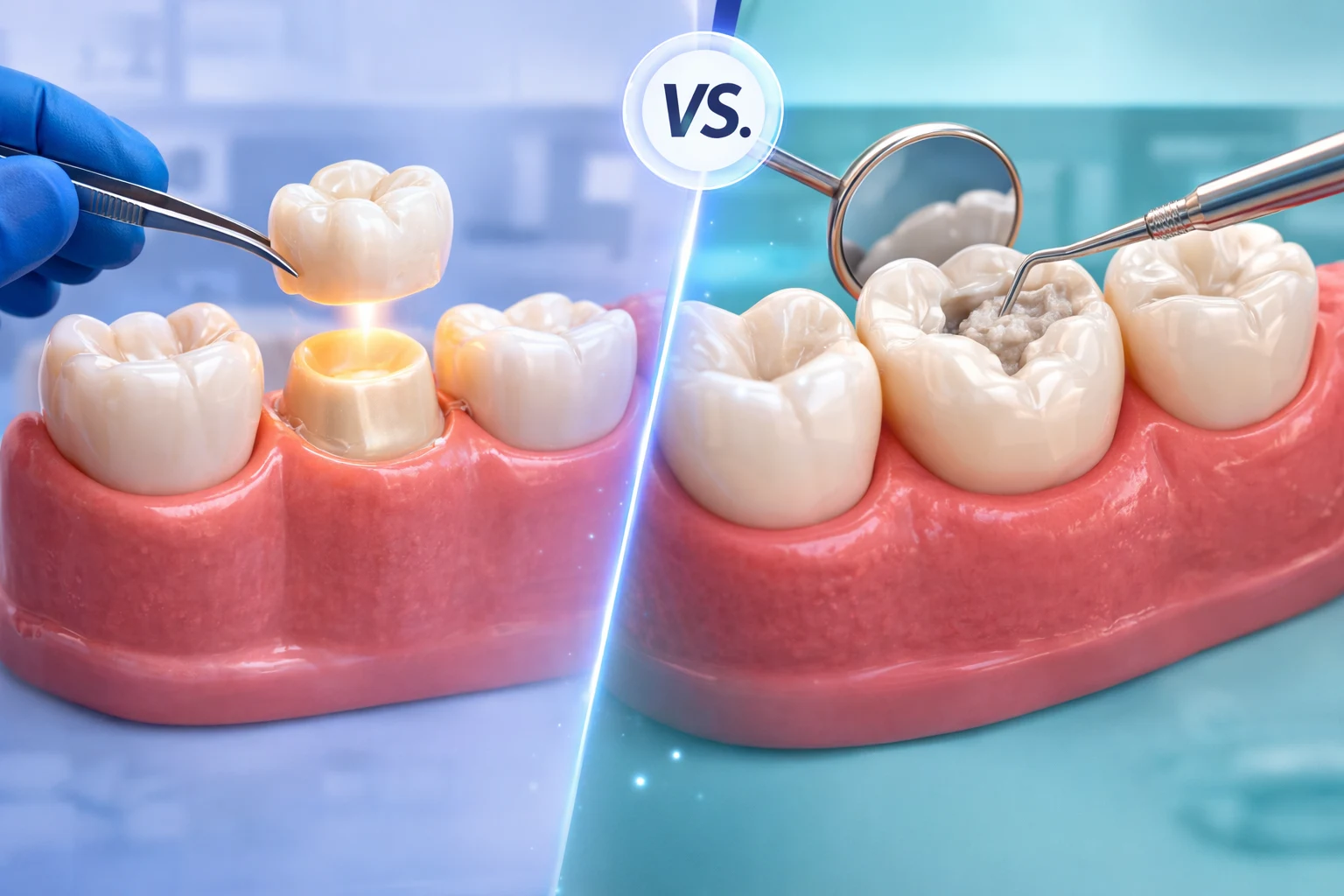
A dental filling is a restoration used to repair small to moderate areas of tooth damage caused by cavities, minor cracks, or early tooth wear. After the damaged or decayed material is removed, the filling restores the affected area while preserving as much of the natural tooth structure as possible.
Dental fillings commonly help treat:
A dental crown is a custom-made cap designed to fit over the visible portion of a damaged or weakened tooth. When a tooth has experienced significant structural damage, a crown may help restore its strength, stability, and function while providing additional protection.
Dental crowns are commonly recommended for:
Teeth with limited healthy structure remaining may require crowns. A filling may not provide enough long-term support when a significant portion of the tooth has been damaged.
Small cavities can often be restored with fillings. More extensive decay, fractures, or weakened areas may require a crown to provide additional coverage and structural protection.
Back teeth are exposed to greater chewing forces than front teeth. Depending on the extent of the damage, a dentist may recommend a crown to provide additional support in areas exposed to heavier bite pressure.
Dentists consider whether a filling can adequately support the tooth over time or whether a crown may provide greater coverage, stability, and durability.
Dentists evaluate tooth damage using a clinical examination, dental imaging, bite assessment, and an evaluation of the remaining tooth structure. Based on these findings, they can recommend the most appropriate restoration for each patient.
Minor decay that affects only a small portion of the tooth can often be treated with a filling. When enough healthy tooth structure remains after the decay is removed, a filling may provide an effective restoration.
Extensive decay can significantly weaken the remaining tooth structure. In these situations, a crown may be recommended to cover and protect the weakened tooth and reduce the risk of future fracture.
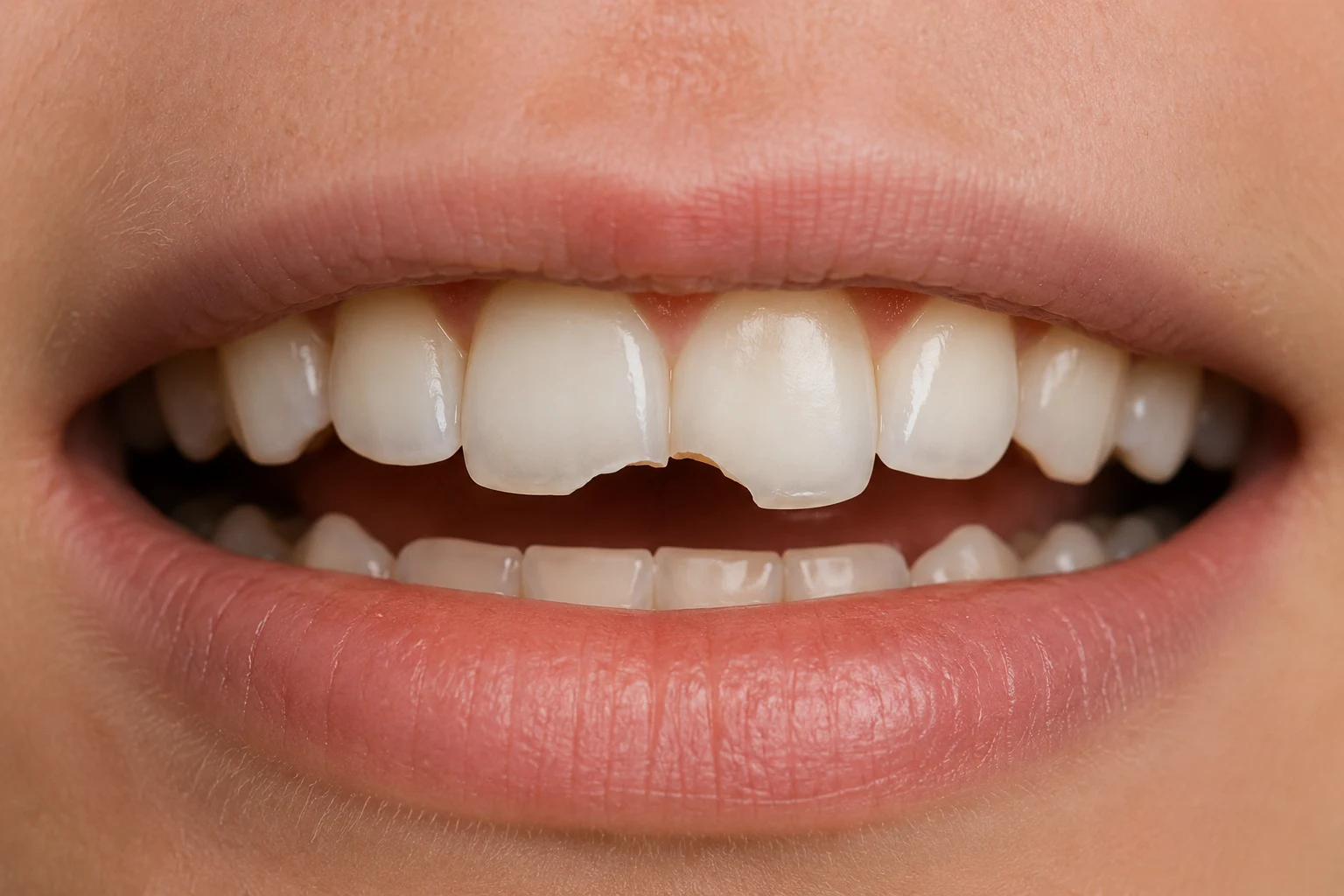
Teeth with significant cracks or fractures may require crowns for additional support. A filling alone may not provide enough protection to prevent the damage from progressing or the tooth from fracturing further.
Teeth that have undergone root canal treatment may be more vulnerable to fracture. Depending on the tooth and the amount of remaining structure, a crown may be recommended to provide additional protection.
Molars are exposed to significant chewing forces. When these teeth are extensively damaged, a crown may provide greater support than a filling, which may be more vulnerable to wear, loosening, or fracture under continued pressure.
Dental fillings are commonly used to repair smaller areas of tooth damage while preserving as much natural tooth structure as possible.
Small cavities affecting limited areas of enamel or dentin can often be treated with fillings without requiring a crown.
Small chips, minor fractures, or early tooth wear may sometimes be restored with filling material to improve appearance and function.
Tooth-colored filling material may also be used for certain minor cosmetic corrections involving tooth shape, small spaces, or surface irregularities.
A dental crown may be recommended when the remaining tooth structure is significantly weakened or when additional long-term protection is needed beyond what a filling can provide.
Large cavities that weaken a significant portion of the tooth may require a crown. Full coverage can help protect the remaining healthy tooth structure from additional damage or fracture.
A crown may help reinforce a tooth that has been significantly cracked or broken by covering and supporting the weakened structure.
Root canal-treated teeth may be more susceptible to fracture. A crown can provide additional protection and structural support when appropriate.
Teeth with large or aging fillings may have less natural structure available for support. This can increase the risk of fracture or restoration failure and may lead a dentist to recommend a crown.
Both crowns and fillings can restore damaged teeth, but their coverage, durability, treatment requirements, and recommended uses differ.
Dental fillings are commonly used because they provide targeted restoration while preserving healthy tooth structure when the damage is limited.
Fillings generally require less tooth preparation than crowns, allowing more of the natural tooth structure to remain intact.
Most dental fillings can be completed during a single appointment with minimal downtime.
Fillings typically have a lower initial cost than crowns, which may require more extensive preparation and custom fabrication.
Dental crowns can provide additional structural support and protection for teeth that have experienced significant damage or weakening.
Crowns can reinforce weakened teeth and reduce the risk of further breakage during normal chewing and biting.
A crown covers the visible portion of the tooth, helping protect weakened tooth structure from additional cracks or structural damage.
With proper oral hygiene, regular dental care, and appropriate maintenance, dental crowns can remain functional for many years.
Good oral hygiene and regular dental care can help crowns and fillings last longer while protecting the surrounding teeth and gums.
Regular brushing and flossing help remove plaque and protect the teeth and restorations from new decay or gum disease.
Teeth clenching and biting hard objects can place excessive pressure on crowns, fillings, and surrounding natural teeth, potentially increasing the risk of damage.
Regular dental checkups allow your dentist to monitor crowns and fillings, assess their condition, and identify potential problems before they become more serious.
Related Blog Posts
Many patients assume that every cavity can be treated with a basic filling. However, severe decay, cracked teeth, large existing restorations, and weakened tooth structure may require stronger and more comprehensive protection. Delaying appropriate treatment can allow dental problems to worsen and may eventually lead to fractures, root canal treatment, infection, or more extensive restorative care.
Choosing between a dental crown restoration and a filling requires a careful evaluation by an experienced dentist who can assess the extent of the damage and determine which restoration is most appropriate for long-term oral health.
At Smiles By Design Dentistry of San Diego, our dental team develops personalized tooth restoration plans that may include crowns, fillings, cosmetic dentistry, and full-mouth restorations based on each patient’s oral health needs and smile goals.
Our team focuses on preserving healthy tooth structure, restoring chewing function, preventing further damage, and helping patients maintain healthier, stronger, and more confident smiles through comprehensive restorative dental care.
The decision comes down to how much healthy tooth structure remains, the severity of the damage, and how much chewing pressure that tooth handles. Small, contained cavities usually get fillings; extensively decayed, cracked, or root canal-treated teeth typically need a crown.
It depends on how much sound tooth structure is left after the decay is removed. If too little remains, a filling won't hold up under normal biting force, which is why extensive decay usually calls for a crown instead.
Most do, because removing the nerve and pulp during a root canal leaves the tooth more brittle, and a crown protects it from fracturing under everyday chewing pressure.
Both procedures are done under local anesthesia and are generally comfortable during treatment. Crowns simply take more preparation and lab time since a custom cap has to be fabricated, while fillings are usually completed in one visit.
Fillings work best when a solid amount of healthy structure remains after cleaning out the decay. If the cavity has significantly weakened the tooth's walls, a crown is generally the safer long-term choice.
Yes — this happens fairly often. A tooth filled years ago can develop new decay around the edges or start to crack, at which point a dentist may recommend a crown to fully protect what's left.
Crowns generally offer longer-term durability because they cover and reinforce the entire visible tooth, while fillings, though effective for smaller repairs, tend to have a shorter functional lifespan under heavy bite pressure.
Yes, crowns typically cost more upfront because they require a custom lab-made restoration, while fillings are a same-visit procedure with lower material and lab costs.
Yes, ongoing grinding can wear down or crack a tooth to the point where a filling is no longer sufficient, making a crown necessary to protect the remaining structure.
Regular brushing and flossing, avoiding excessive bite pressure like chewing ice or hard objects, and keeping up with routine dental checkups all help extend the life of either restoration.